The Veil of Veronica at St.Peter's
August 20, 2026 · 3 min read
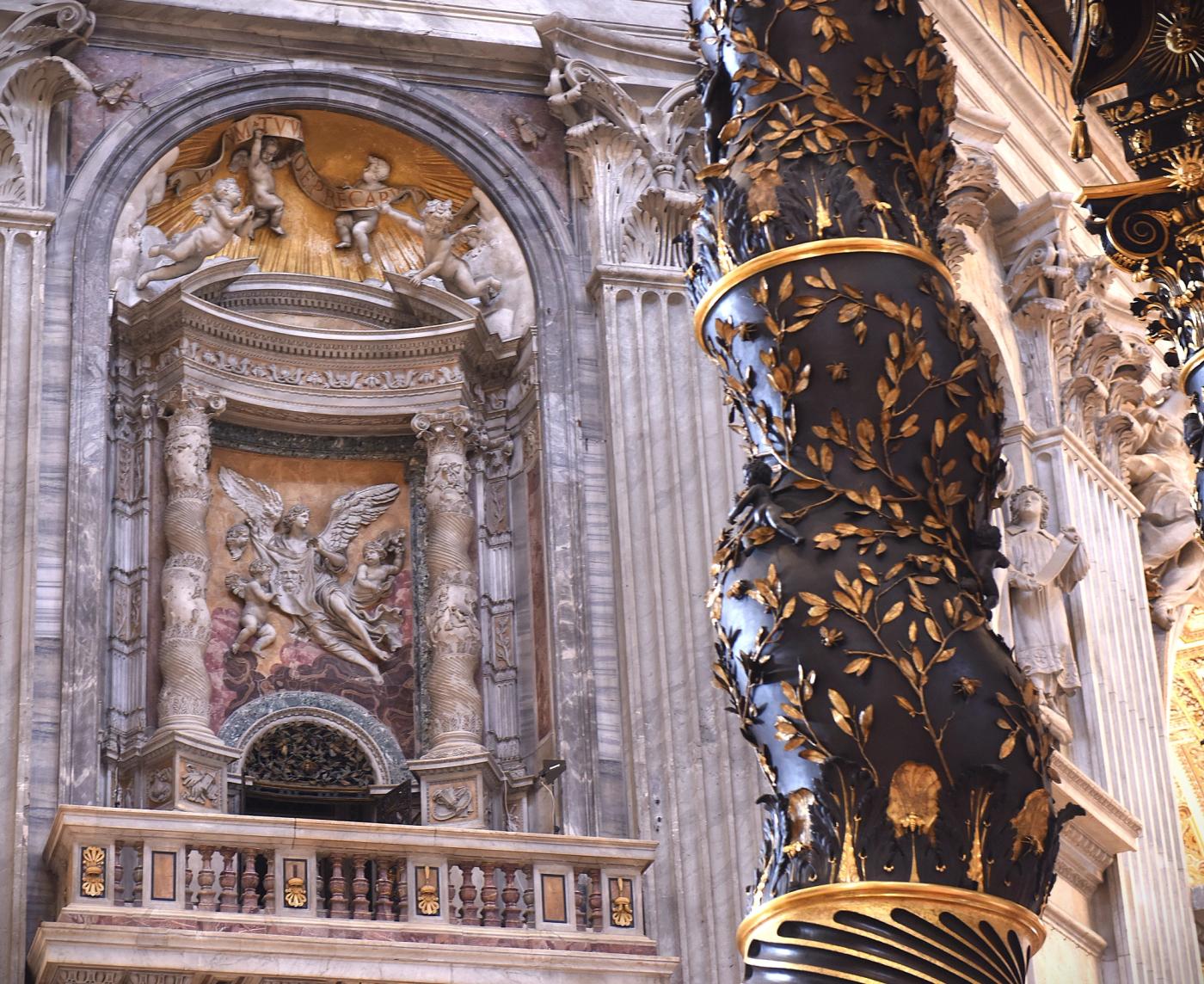
As Jesus walked to Calvary, one of the ladies who accompanied Him gave Him a sudarium or sweatcloth, and with it He dried His face, leaving us His image. Veronica means “true icon” from the Latin vera and the Greek eikon, and that name was over time given to the faithful disciple. There is a small chapel marking the location on the Via Dolorosa, now commemorated in the Sixth Station of the Cross. John VII (705-707) made a chapel for the relic at Old St. Peter’s, which he had brought from Jerusalem or wherever it had been hidden after the Muslims took Jerusalem in 637. Innocent III (1198-1216) began public veneration of the relic and composed a prayer for the intercession of the saint. Boniface VIII (1294-1303) was inspired by the Veil to hold the first Jubilee, where the relic was declared one of the “marvels” of Rome.
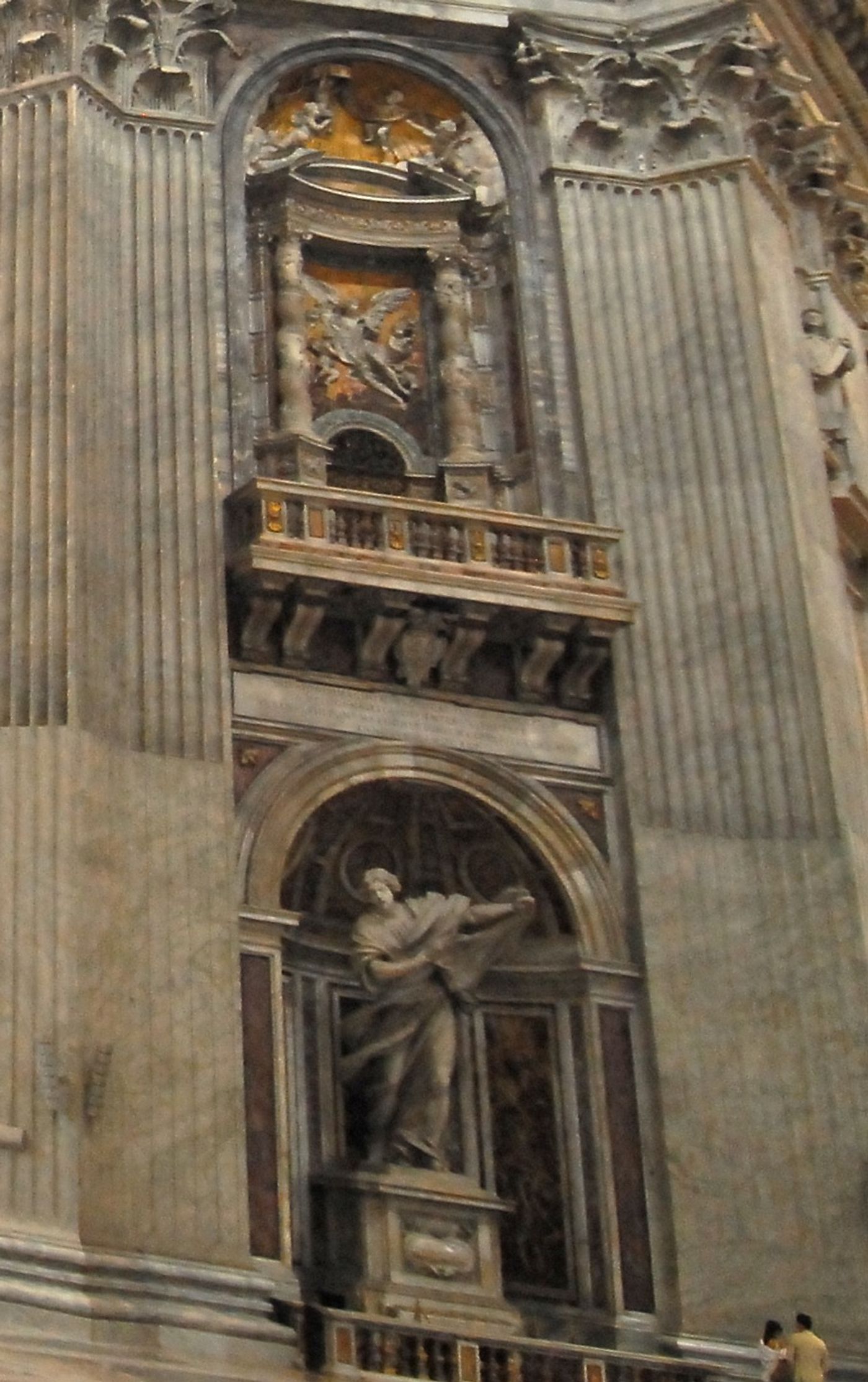
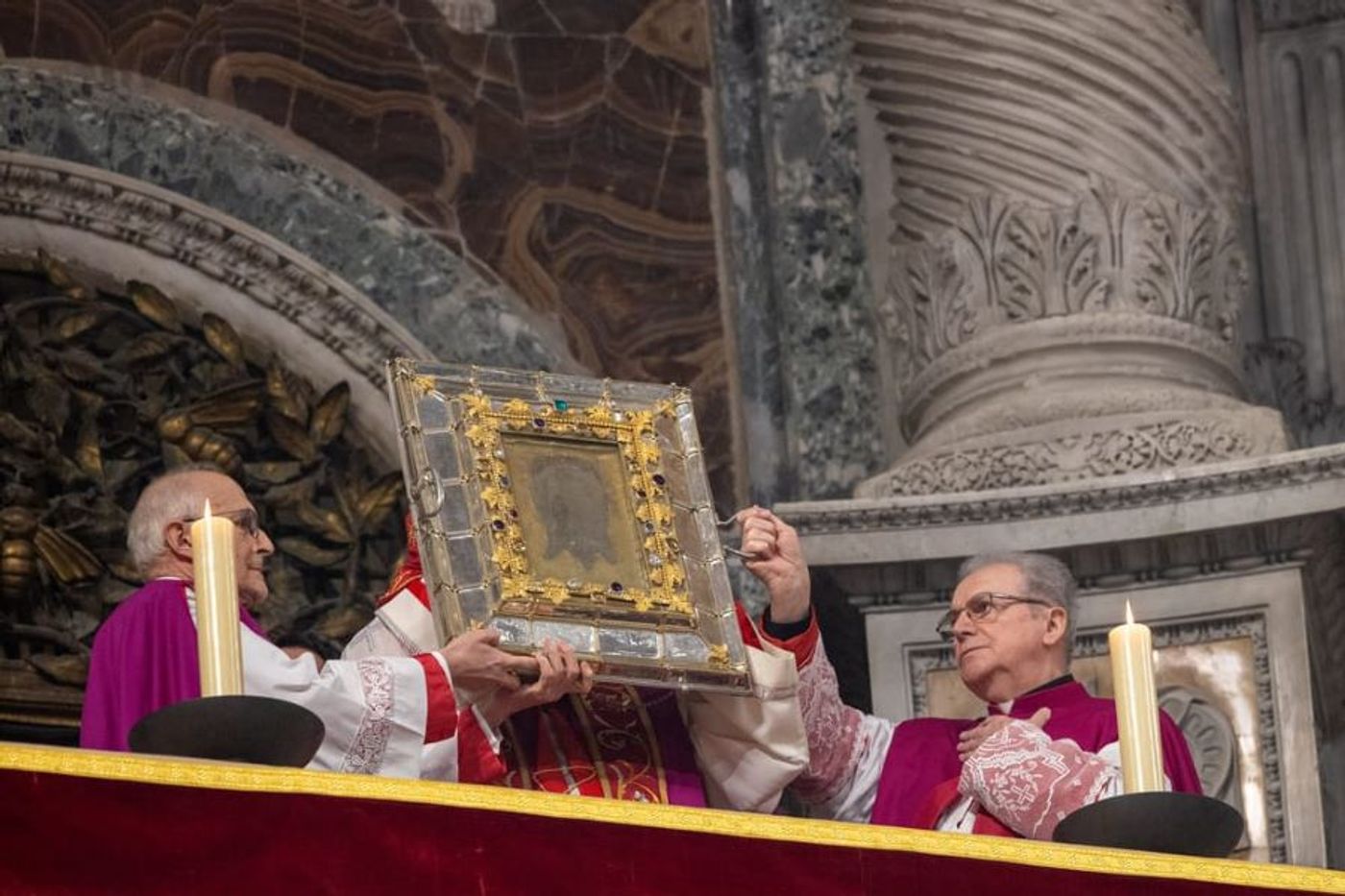
Today the sudarium is kept in a silver reliquary in the balcony chapel inside the southwest pier of the Crossing at St.Peter’s. On Passion Sunday, after the long station procession ending at the High Altar (San Pietro is the Lenten station church for Passion Sunday), the Vexilla Regis is sung, then the clerics remove mitres and birettas, and face the chapel situated above Francesco Mochi’s statue of the Saint. A canon recites the prayer of Innocent III, and he and two others go to the chapel in the balcony above and remove the relic from the reliquary and, accompanied by the ringing of the bells of St. Peter’s, exhibit it on the balcony to all the faithful below. The bells are rung again as the relic is returned to its chapel.
Gianlorenzo Bernini is responsible for the design of the Crossing in St.Peter’s, comprised of the four massive piers of Donato Bramante. He undertook this decoration after he designed the Baldacchino which is situated over the tomb of Peter and centers the crossing. St.Peter’s had four prescious relics- the True Cross of Helen, the Spear of Longinus, the Head of Andrew, and the Veilof Veronica. Each was given a massive statue for its niche in the piers (Bernini himself did the Longinus). Bernini then designed four balconies over the niches within Bramante’s piers, to be used for exhibition of the relics on special occasions. Angels and putti carry marble images of the relics, against a background of diaspro tenero and diaspro infino marble, a beautiful pale pink.
The most special aspects of the balconies are the spiral columns which Constantine brought from Greece for the shrine of Peter.
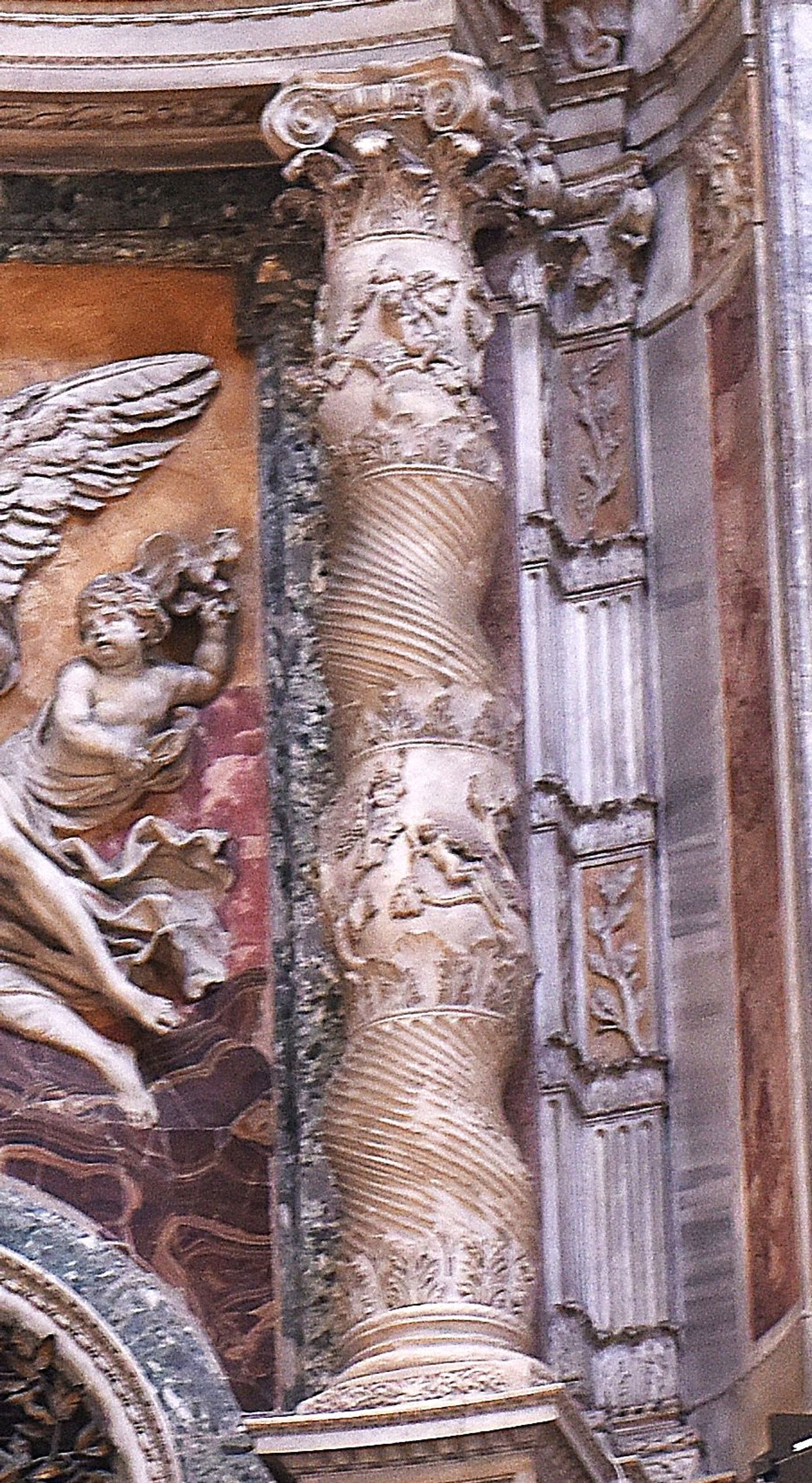
They are precious Tirio Corsi marble, from Mount Lebanon near Tyre. They are a bluish white, “sparingly peppered with brown, and mottled like boiled sago.” H.W.Pullen The columns are almost 5 metres in height, and were cut into a “gentle spiral like and old fashioned stick of barley sugar, and carved with alternate bands of spiral fluting and vine scroll, with naked, winged Cupids playing among the foliage.”: Toynbee and Perkins. They date to the second or third century. Constantine took them from some temple in the northern Aegean or the Sea of Marmara, perhaps in the neighborhood of Constantinople. Originally, The columns stood directly over Peter’s tomb. Gregory the Great made them into a screen situated in front of the shrine, where they remained for a thousand years, until old St.Peter’s came down and they became available for Bernini.
Thank you for reading. If you found this useful, you might also enjoy the books.