The Pinecone of the Vatican Cortile di Pigna
October 5, 2026 · 3 min read
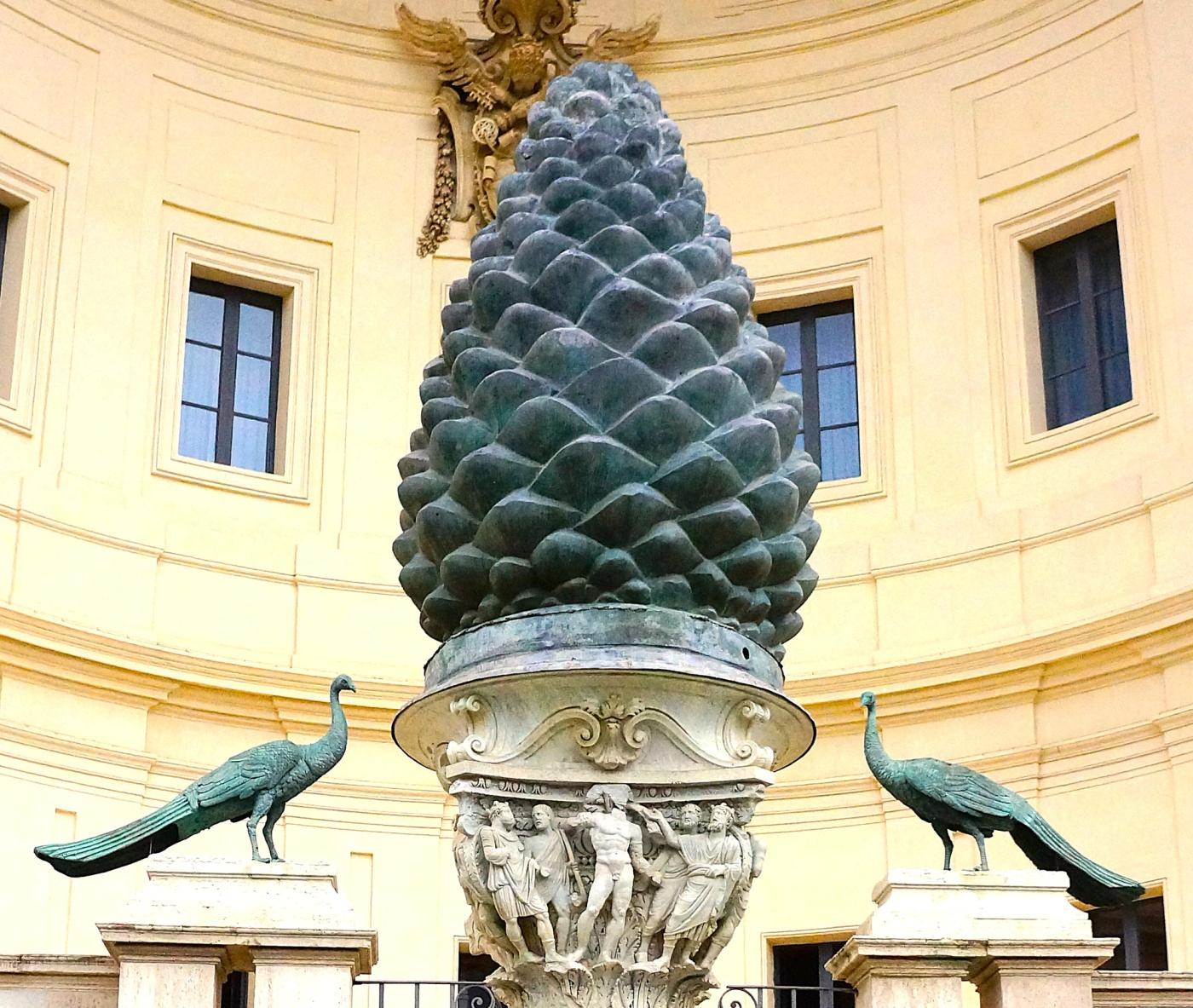
Pope Saint Symmachus (498-514) managed during the turbulent times of the Gothic Kingdom of Italy and King Theodoric to make what was Rome’s most beautiful fountain (affectionately called Pignone, or the big pinecone by Romans), which functioned as a cleansing/blessing Cantharus, in the Paradiso entry to Old St. Peter’s.
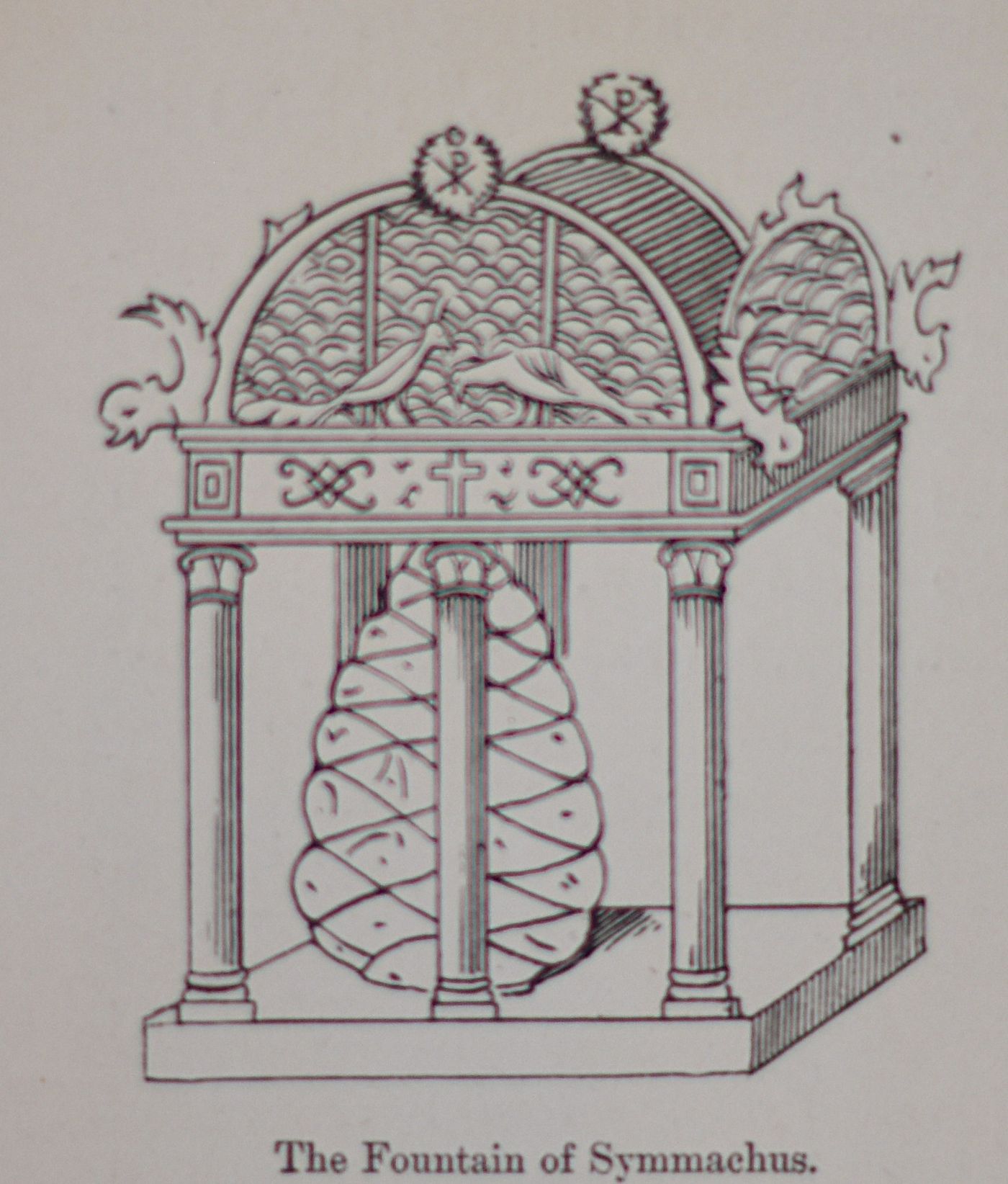
The Paradiso acquired its name in the eighth century for the mass of trees and flowers planted there to greet the pilgrim to Peter’s tomb. Symmachus had a predilection for “buildings connected with hygiene and cleanliness, such as baths, fountains and necessaria.” Rudolf Lanciani. Symmachus put his fountain in the middle of the atrium or quadroportico of the Paradiso, its centerpiece an eleven-foot-high bronze pinecone. The pinecone was cast in the first or second century for Agrippa’s artificial lake in the Campus Martius. It had holes at the end of each of its scales and water sprung from each of these. The bronzemaker’s name is etched at the base: P CINCIVS P L CALVIVS FECIT :“This is the work of Publicius Cincius Calvius, freedman of Publius Cincius.”
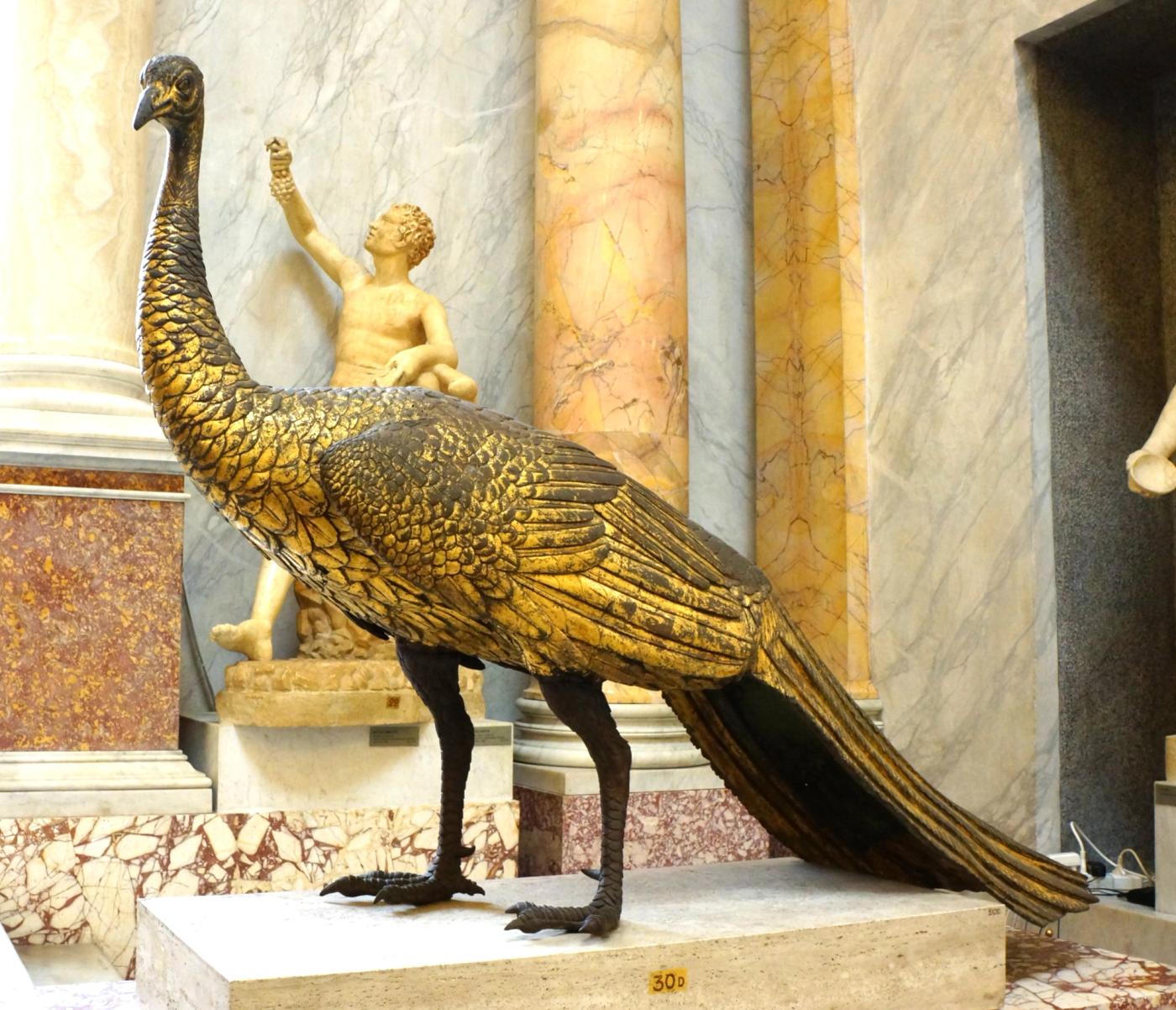
Symmacchus made a large basin for the pinecone, a square tabernacle supported by eight columns of precious red porphyry, with a dome of gilt bronze. He then had peacocks, dolphins, and flowers, also of gilt bronze, placed on the four architraves. The four peacocks came from the top of the mausoleum of Hadrian.
Jets of water flowed from the architraves to the basin below. Ancient marble bas-reliefs were purloined from ancient temples for the border of the basin.These were filled with panoplies and griffins and the like. On the top were semicircular bronze ornaments worked in what were called “a jour” or open relief without any background.These were crowned with the Chiro, the monogram of Christ.
This precious fountain survived for almost 1100 years, through all the sacks and wars of the barbarians and Europeans, and earthquakes and fires, only to succumb to Paul V Borghese. In 1608 the Paradiso, the Garden of Eden, came down to make way for Maderno’s façade at New St. Peter’s. To complete the horror: in 1613 the four dolphins, two of the peacocks, and the dome were melted to provide some of the ten thousand pounds of metal required for the casting of the statue of the Madonna placed by Paul on the top of the column of Piazza Santa Maria Maggiore (itself the last surviving column from the Basilica of Maxentius!).
The pinecone and two of the peacocks (now preserved in the Braccio Nuovo) made their way in 1608 to what was renamed the Giardino della Pigna, the uppermost cortile of Bramante’s Belvedere passageway from the northern Palazzetto of Innocent VIII to the Vatican Palace, and were placed on the balustrade above Michelangelo’s steps leading to the nicchione or niche put up 1562 by Pirro Ligorio, guarded below by two lions of the pharoah Nectanebo II.
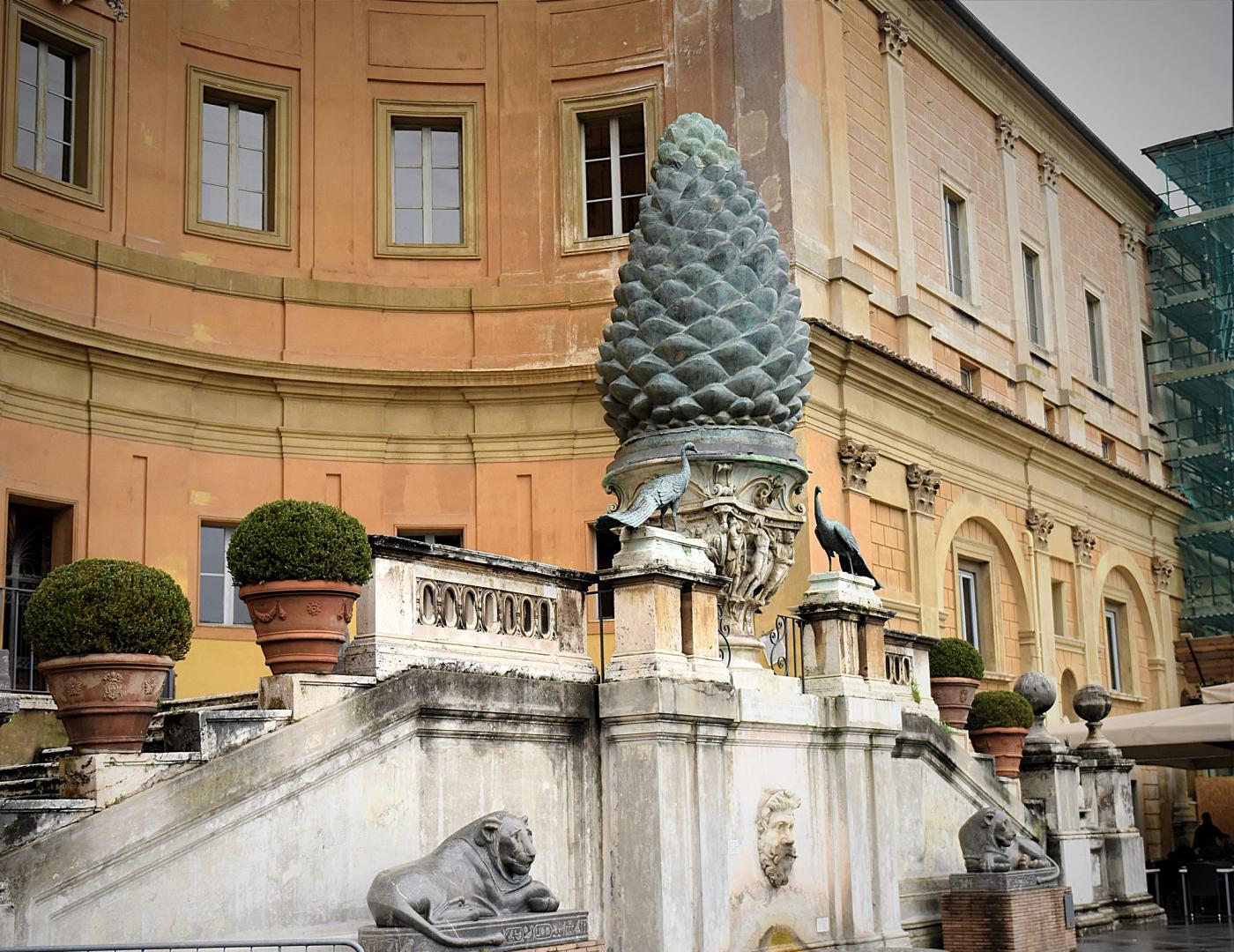
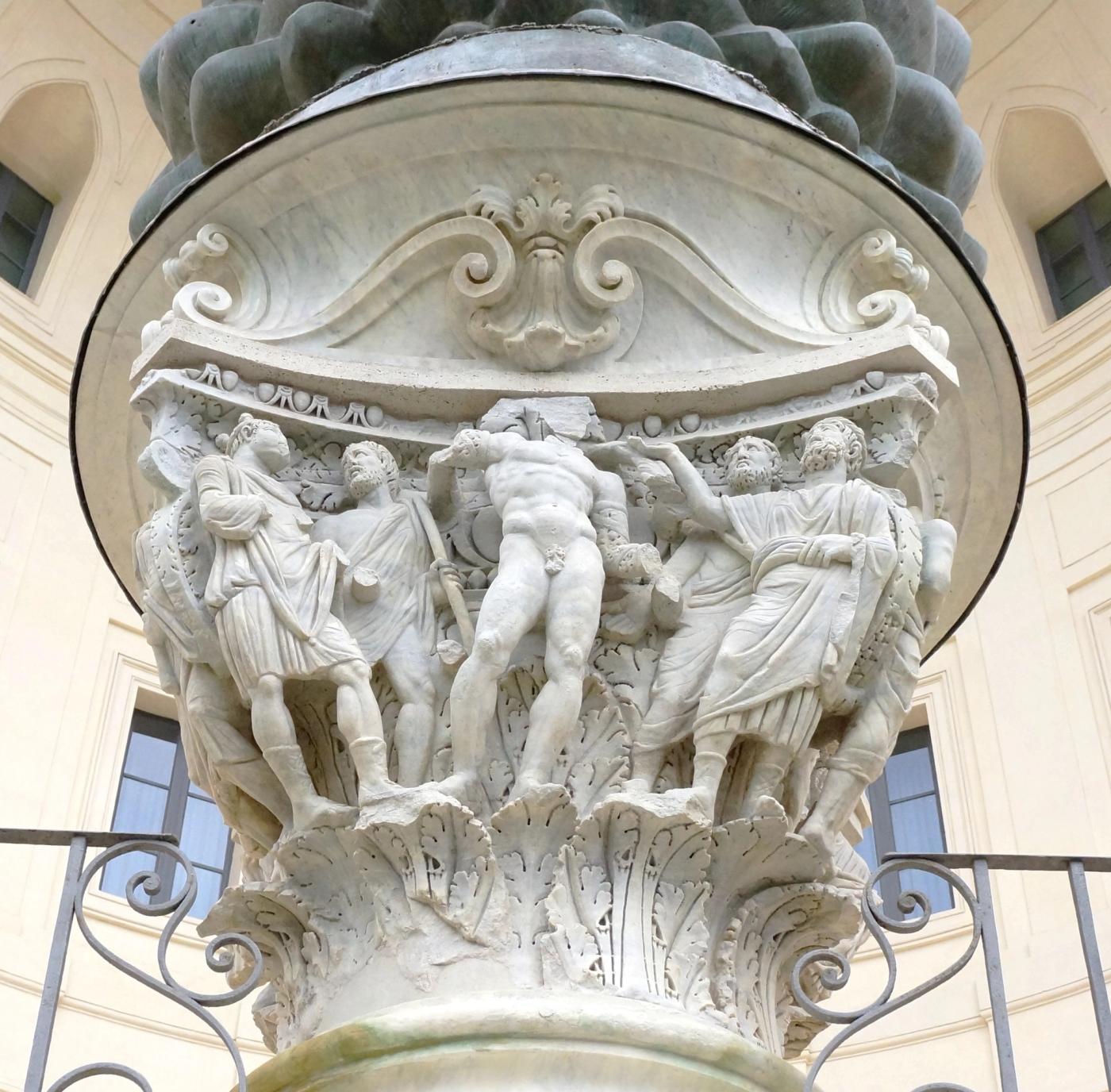
Holding the pinecone is a mammoth ancient capital that came from the Baths of Alexander Severus (222-235) or the Baths of Nero (54-68) with reliefs of athletes and judges, the main figure of an athlete is being crowned with the laurel.
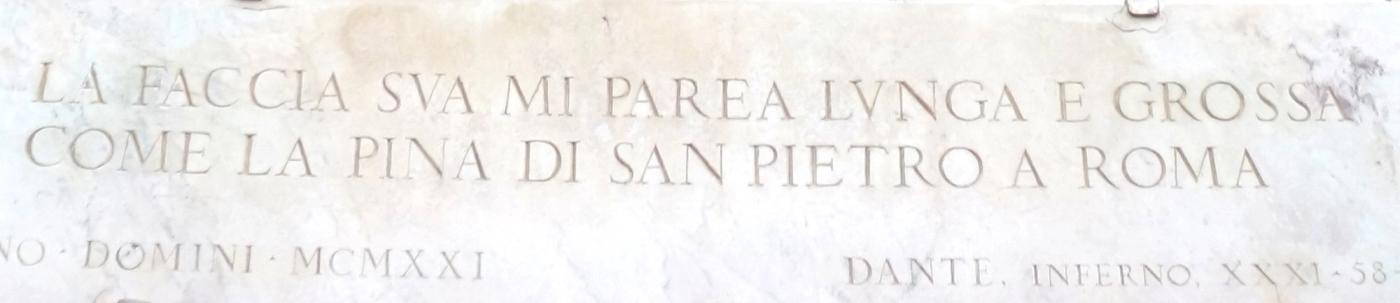
Below is an inscription with a verse from Dante: “LA FACIA SUA MI PAREA LUNGA E GROSSA COME LA PINA DI SAN PIETRO A ROMA, E A SUA PROPORZIONE ERAN L’ALTRE OSSA.”“His face appeared to me as long and large as is at Rome the pinecone of Saint Peter’s.”
Thank you for reading. If you found this useful, you might also enjoy the books.