The Fontana Maggiore at Perugia
October 18, 2026 · 2 min read
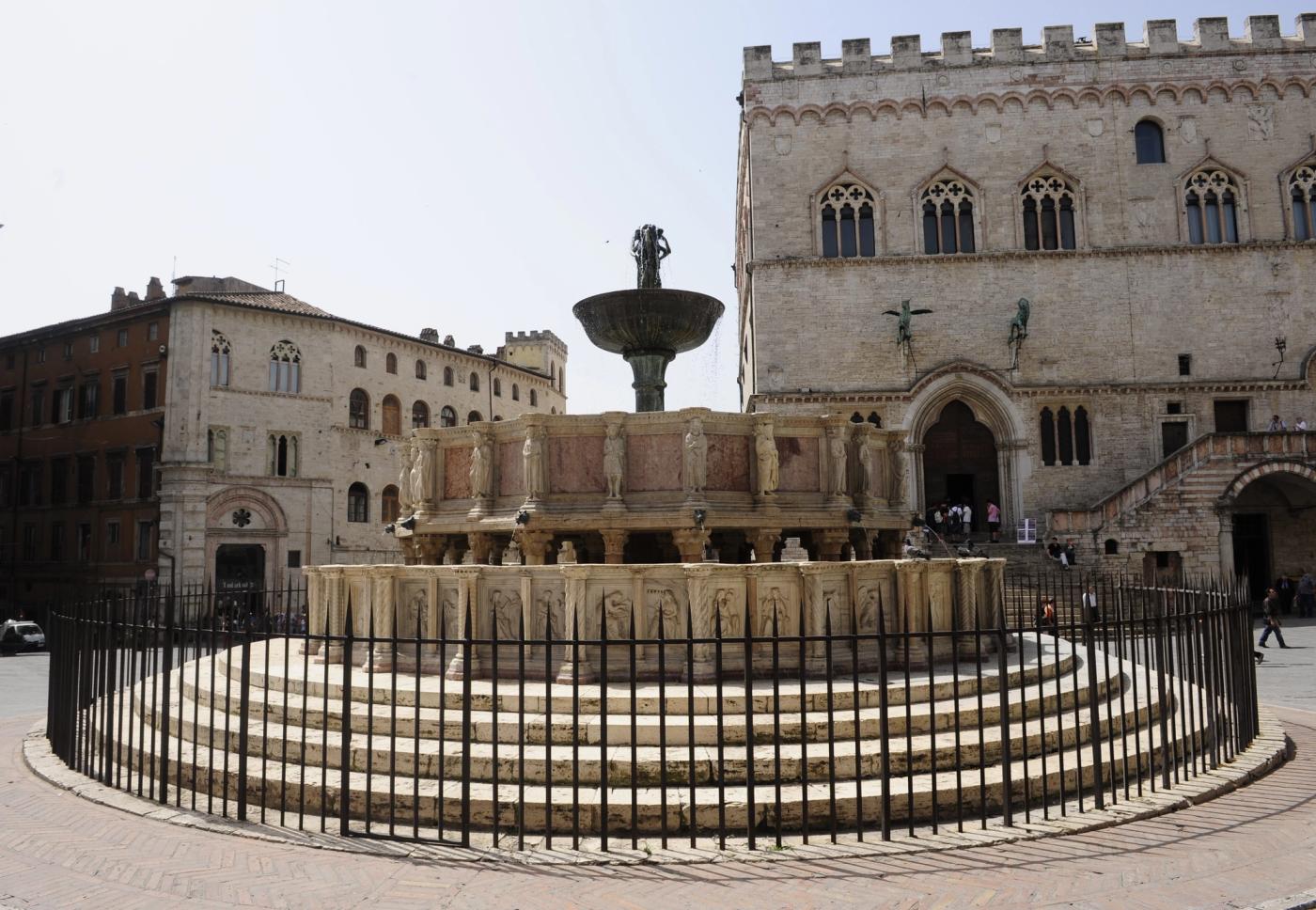
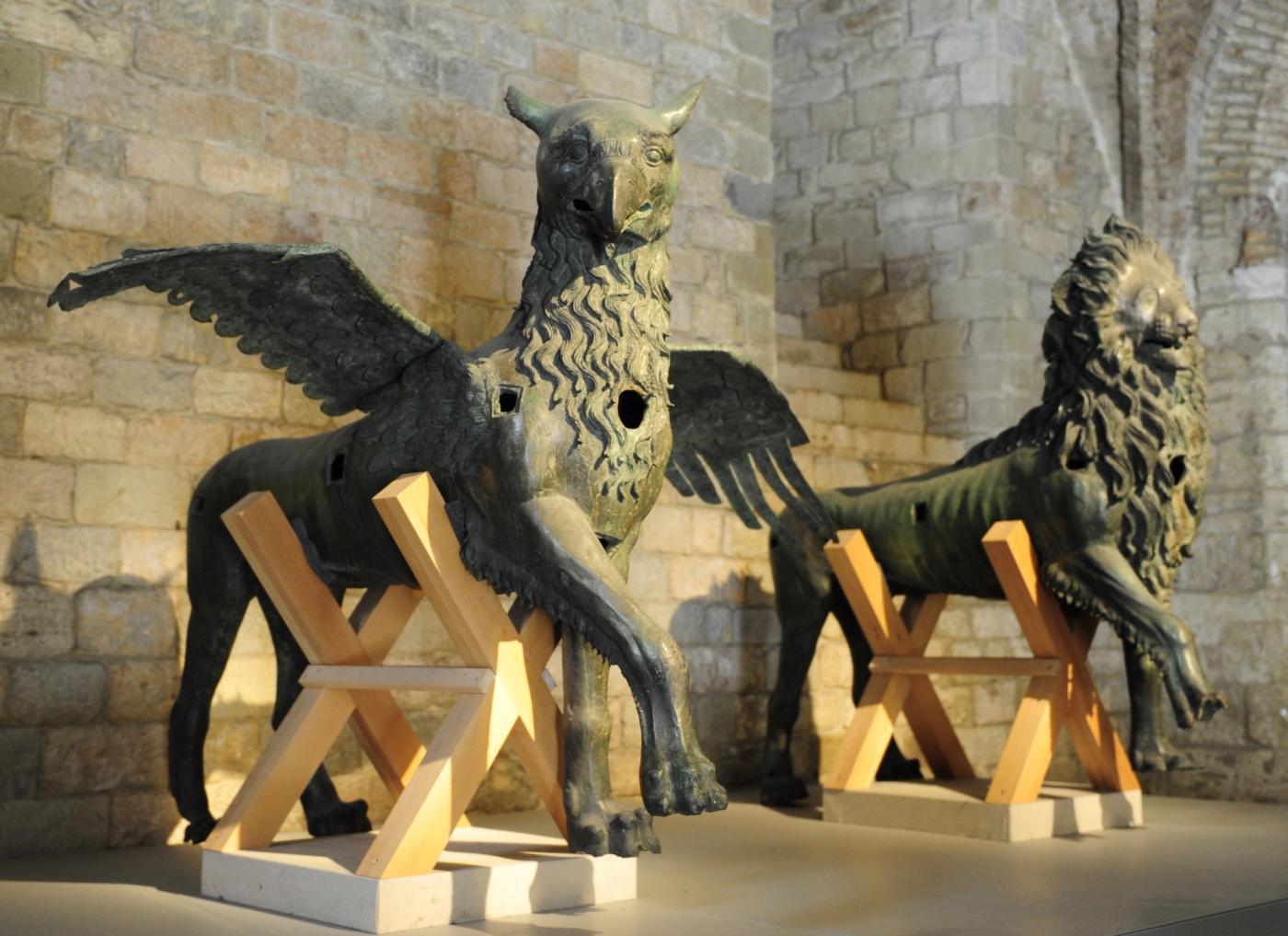
Perugia is one of the most delightful towns in Italy, the capital of Umbria, situated on a small mountain not far from Assisi. It is home to the Fontana Maggiore, which the locals will tell you is the most beautiful fountain in all Italy (“dear as the apple of their eye”). The legend is that Perugia was founded by Noah himself, whose arc lodged in the Apennines after the great flood. Perugia became the most powerful member of the Etruscan League. Their powerful warriors captured and killed a powerful griffin on one of their war expeditions, and with its claws and skin they made it into the city’s mascot. The city has an incredible history: the Roman Octavian Augustus, the Greek Belasarius, the Goth Totila, the Lombards Agiluf and Ratchis, Francis of Assisi, Bernardino of Siena, Innocent III, all of them came here to fight, besiege, preach, be imprisoned, and to rule.
Perugia’s greatest weakness throughout these endless sieges was its lack of water. Although the Tiber lies directly below the city, there was no easy way to bring water to the top of the mountain. In 1280 the city finally finished an aqueduct to bring water from the hills to the north. The Perugian architect Fra Bevignate designed the mostra fountain, and Nicola Pisano was brought in with his son Giovanni to carve the reliefs and statues.
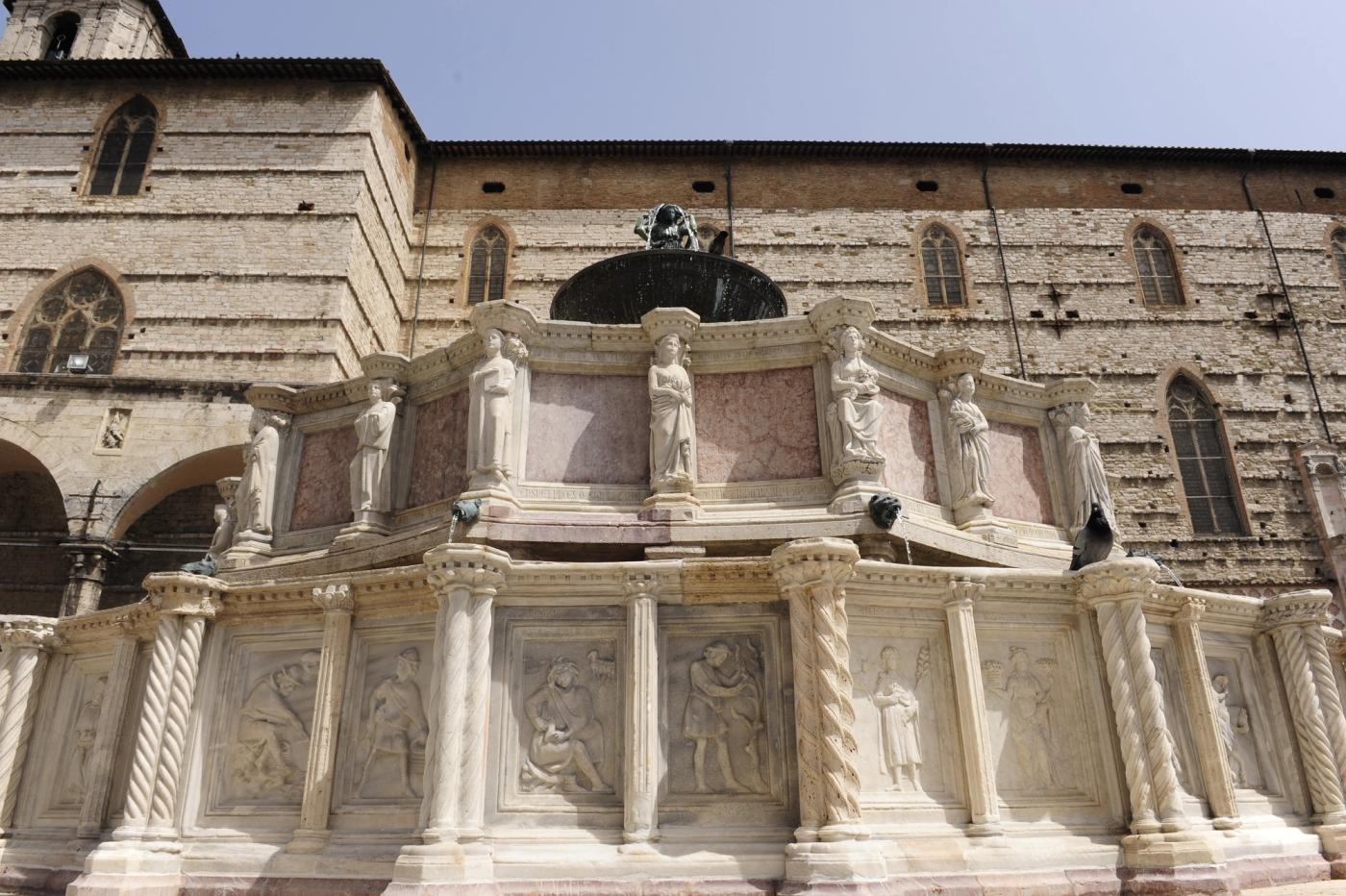
The plan called for a bronze basin on the top, and a certain Rosso Padelellaio was brought in for this.
The fountain has two concentric polygonal basins. The lower basin has twenty five sides, each has two panels, and these illustrate the “labors of the month” (which was a medieval theme showing the usual rural activities over the course of the year), with the symbol of the zodiac for that month in the upper corner, and in addition the Guelph lion and the Perugian Griffin, the Trivium, two eagles (one signed by Giovanni), scenes from the Old Testament (Expulsion from the Garden, Samson, David), scenes from Aesop’s Fables (Fox and Crane, Wolf and Lamb), and Romulus and Remus.
The upper basin has at the edges of the panels twenty-four statues (high relief) of saints, mythological and other characters, and Old Testament figures.
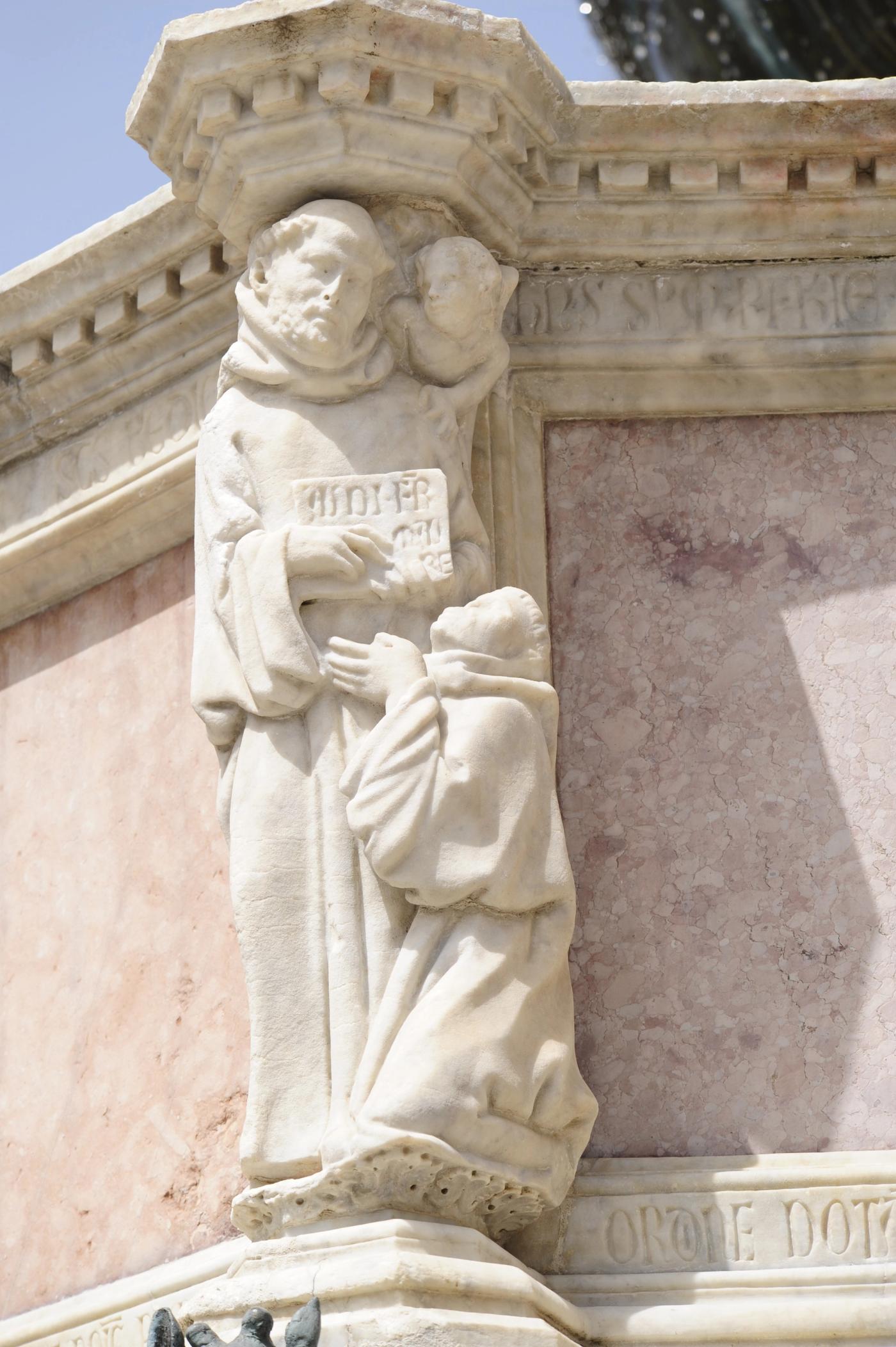
Among these are the nymph of Chiusi, Augusta Perusia, the nymph of Lago Trasimeno, Salome, Saint Lawrence, patron of the city, and most importantly Saint Ercolano, the Bishop of Perugia who was martyred by the Goths.
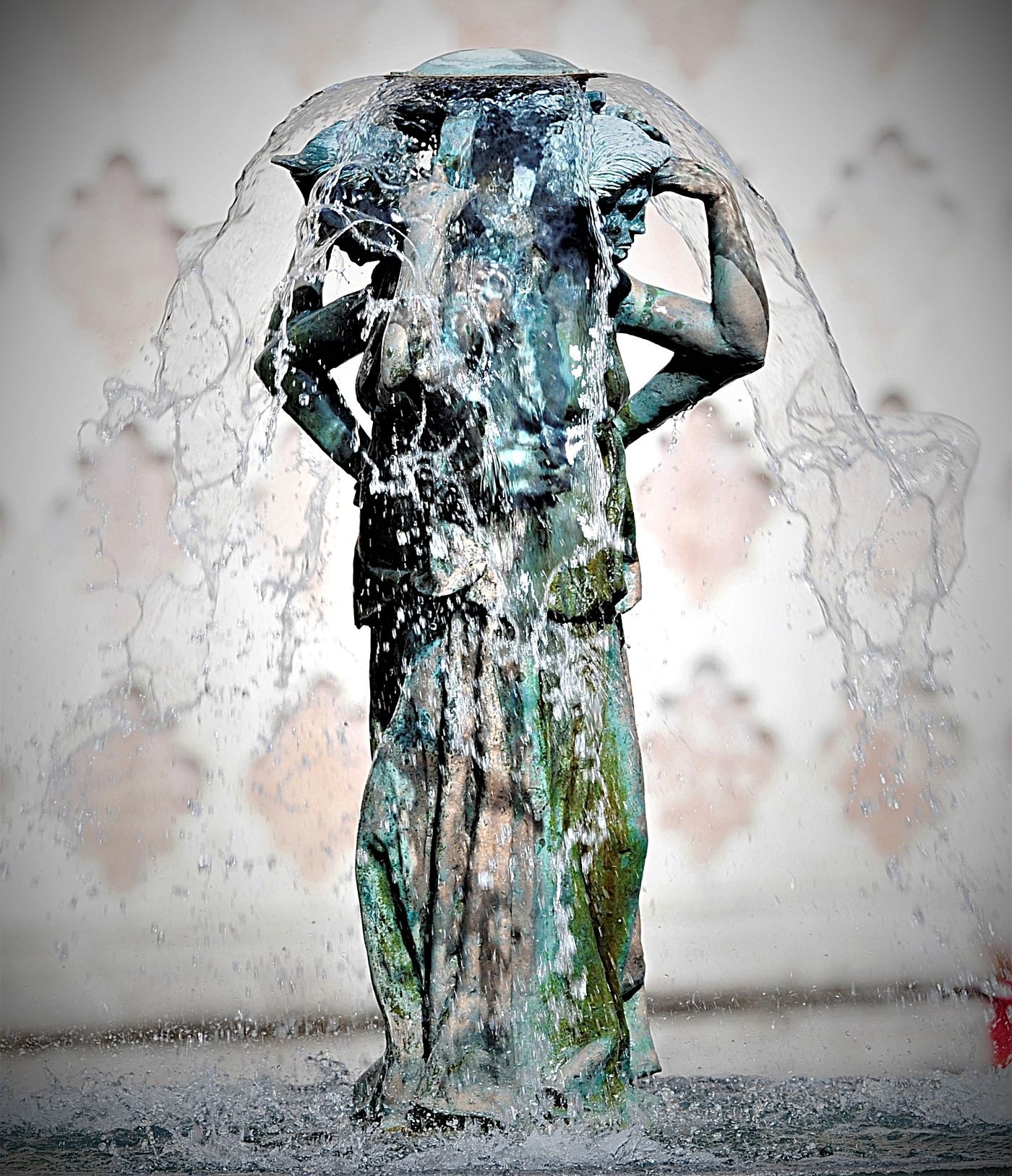
The bronze cup on top of the fountain has a bronze group of the Three Graces (the Charities, daughters of Zeus) who hold an amphora out of which the water flows into the two basins below. Older books say that once the bronze griffin we now find in the Palazzo dei Priori was on top.
Thank you for reading. If you found this useful, you might also enjoy the books.