The Duomo of Siena: Giovanni Pisano's Sculptural Masterpiece
September 24, 2026 · 2 min read
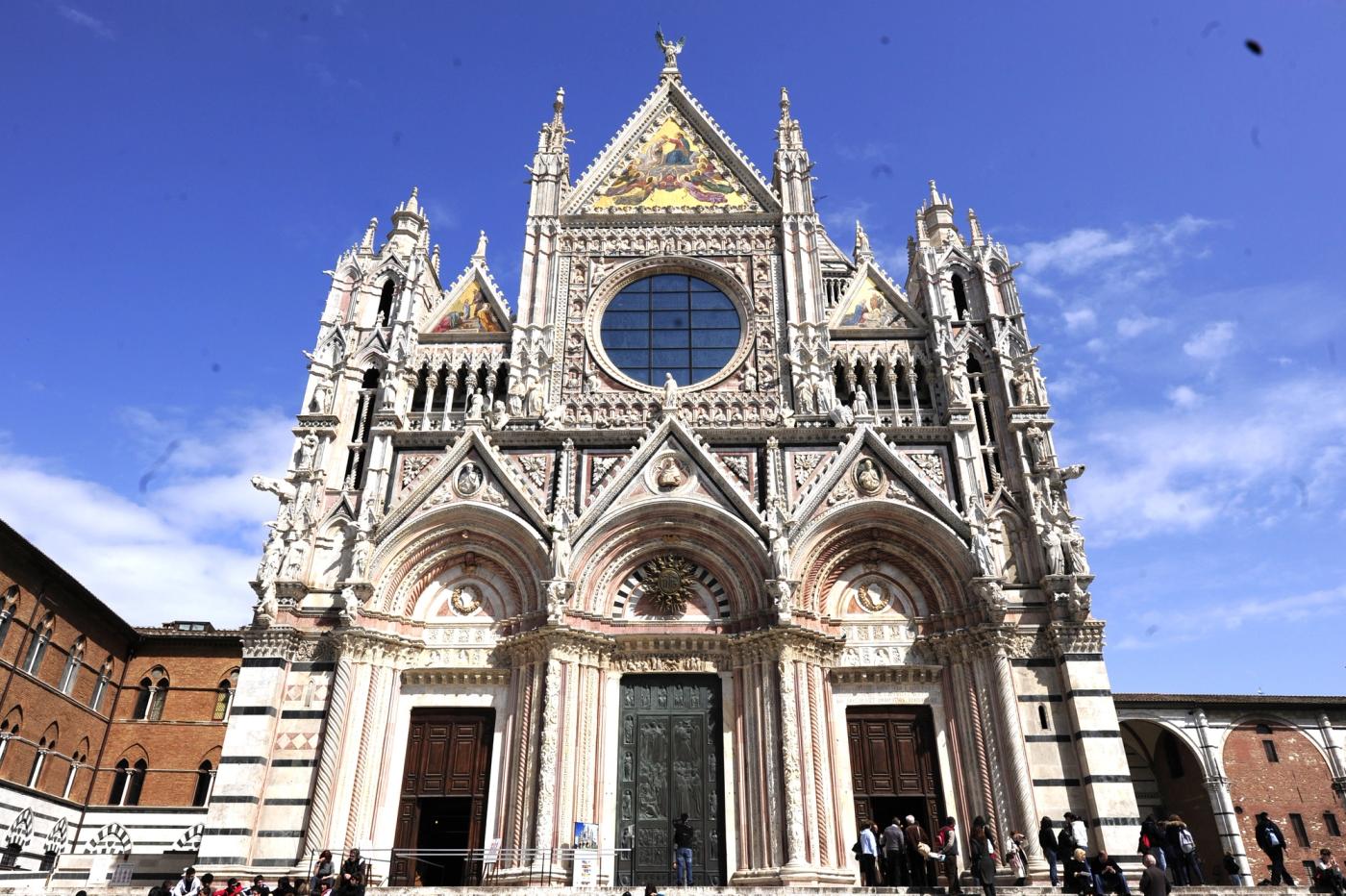
Giovanni Pisano (1248-1315) was the son of sculptor Nicola Pisano (1225-1284), who began the Italian Renaissance with the Baptistery Pulpit in Pisa in 1260. While Nicola returned the classical tradition to Italian sculpture, it was for Giovanni to bring this sculpture life and emotion. Based on the fame of his work as an assistant to his father on Pisa’s Baptistery, Perugia’s Fontana Maggiore, and the pulpit at Siena Duomo, he was lured by the Sienese in 1285 to construct the Gothic façade for their new duomo. Here he created what may be the most beautiful façade in all Italy.
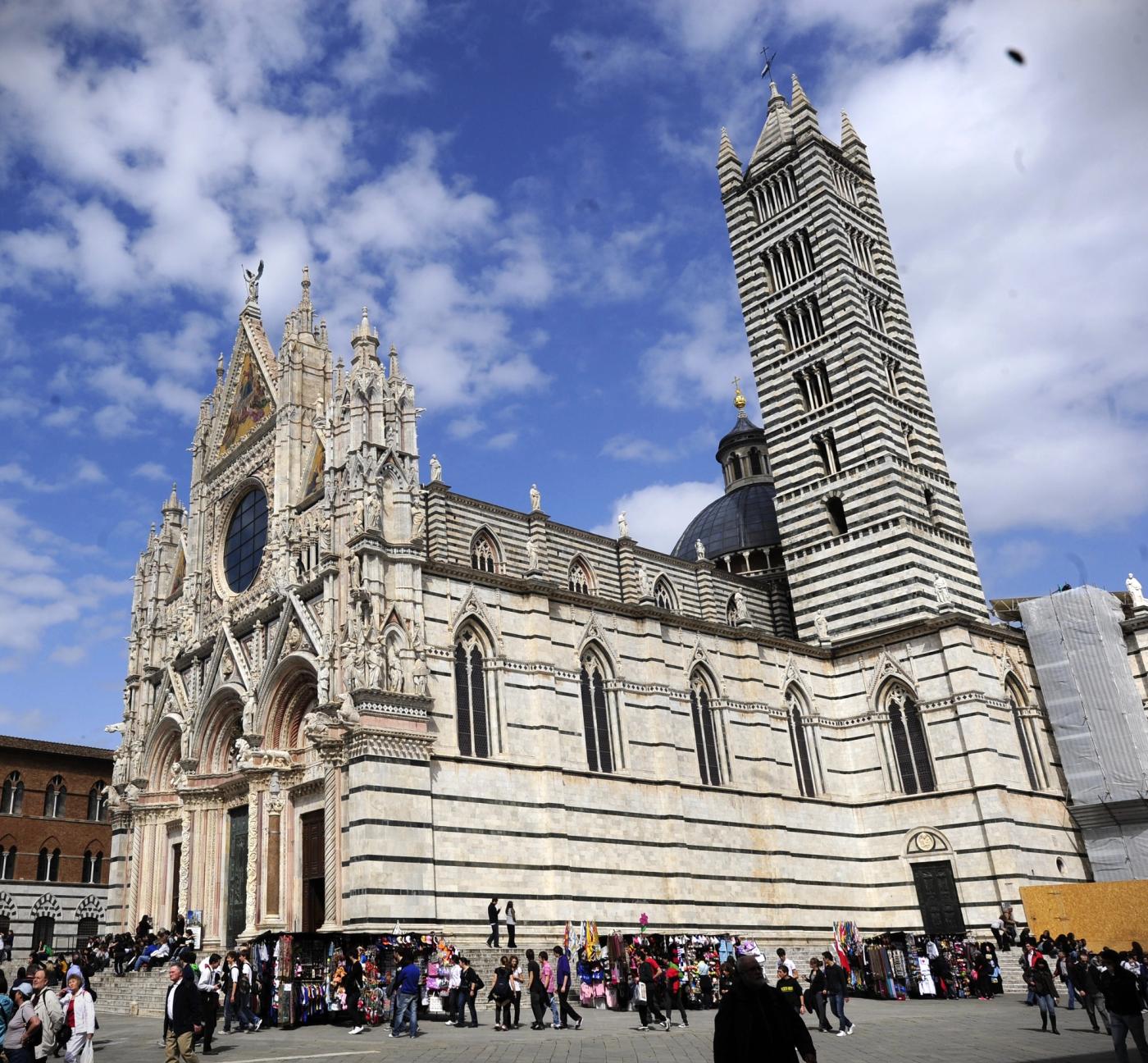
After his departure in 1297 others raised the height and made the upper portion, but the main features survived. The combination of exquisite marbles of cream-white, pink, green, yellows, and reddish browns used for the façade has no equal in Italy.
At the Siena Duomo, Giovanni created a stage, a sculptural façade with fourteen prophets and wise men and women of Antiquity, each with a scroll referring to some aspect of the Incarnation. In the left turret, Hagai, Isaiah (ECCE VIRGO CONCIPIET ET PARIAM FILIVM), Balaam (ORIETVR STELLA EX JACOB).
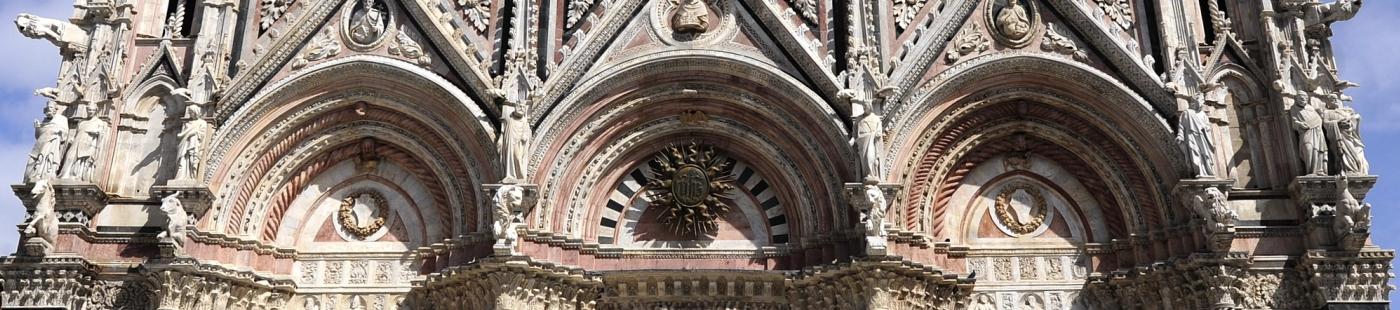
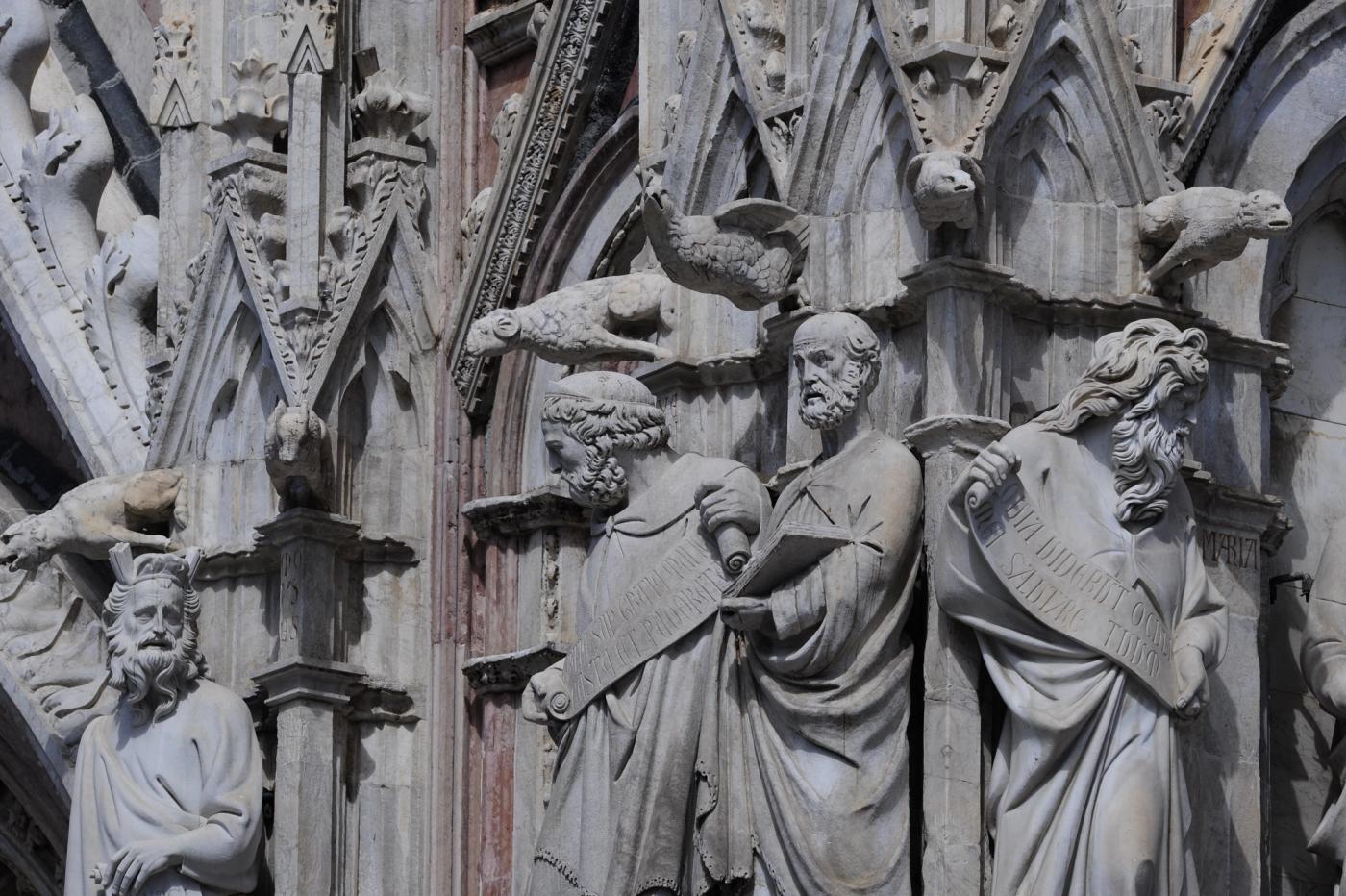
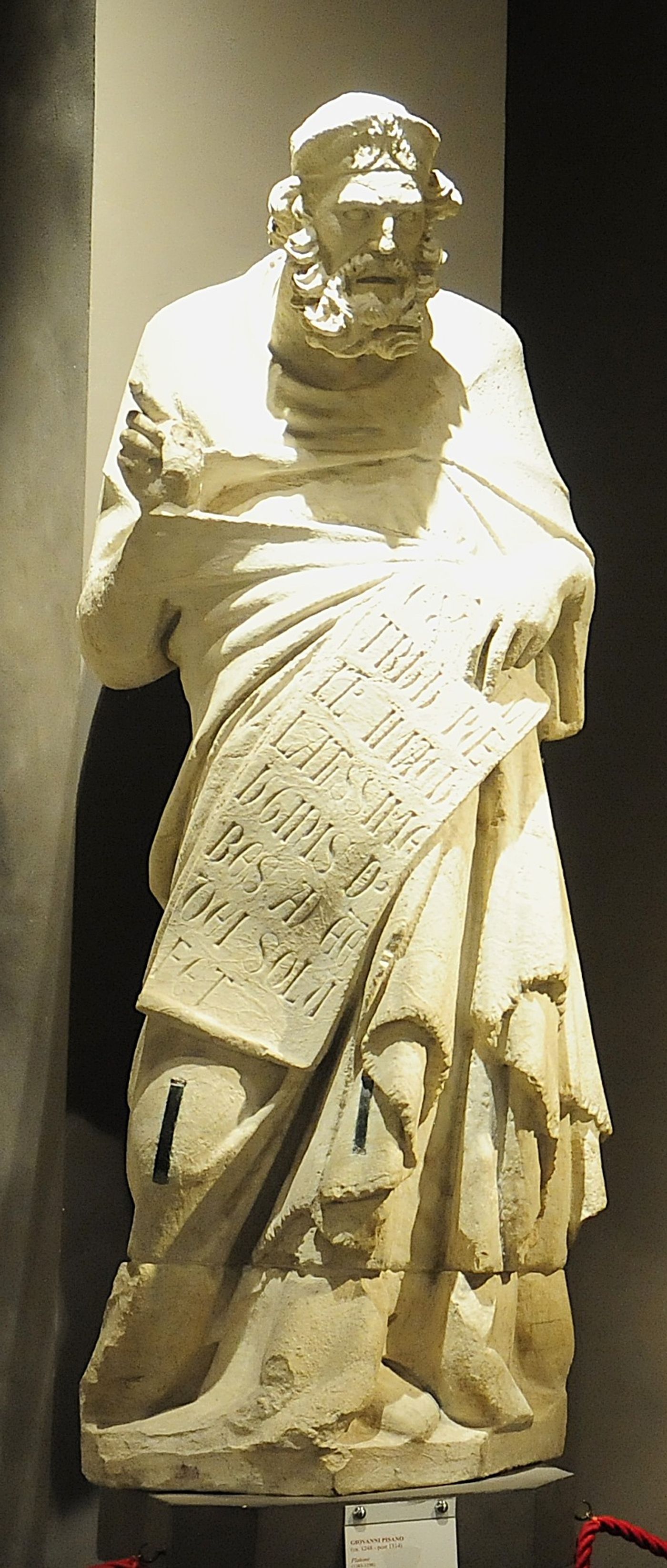
Then on the front Plato, Daniel (now lost), the Erythean Sibyl (ET VOCABITVR DEVS ET HOMO). Next David and Solomon look at each other across the central portal. Then Moses in conversation with Joshua. Then Habakkuk. On the south turret are Simeon, speaking to Mary, sister of Moses (known as Miriam), and finally Aristotle.
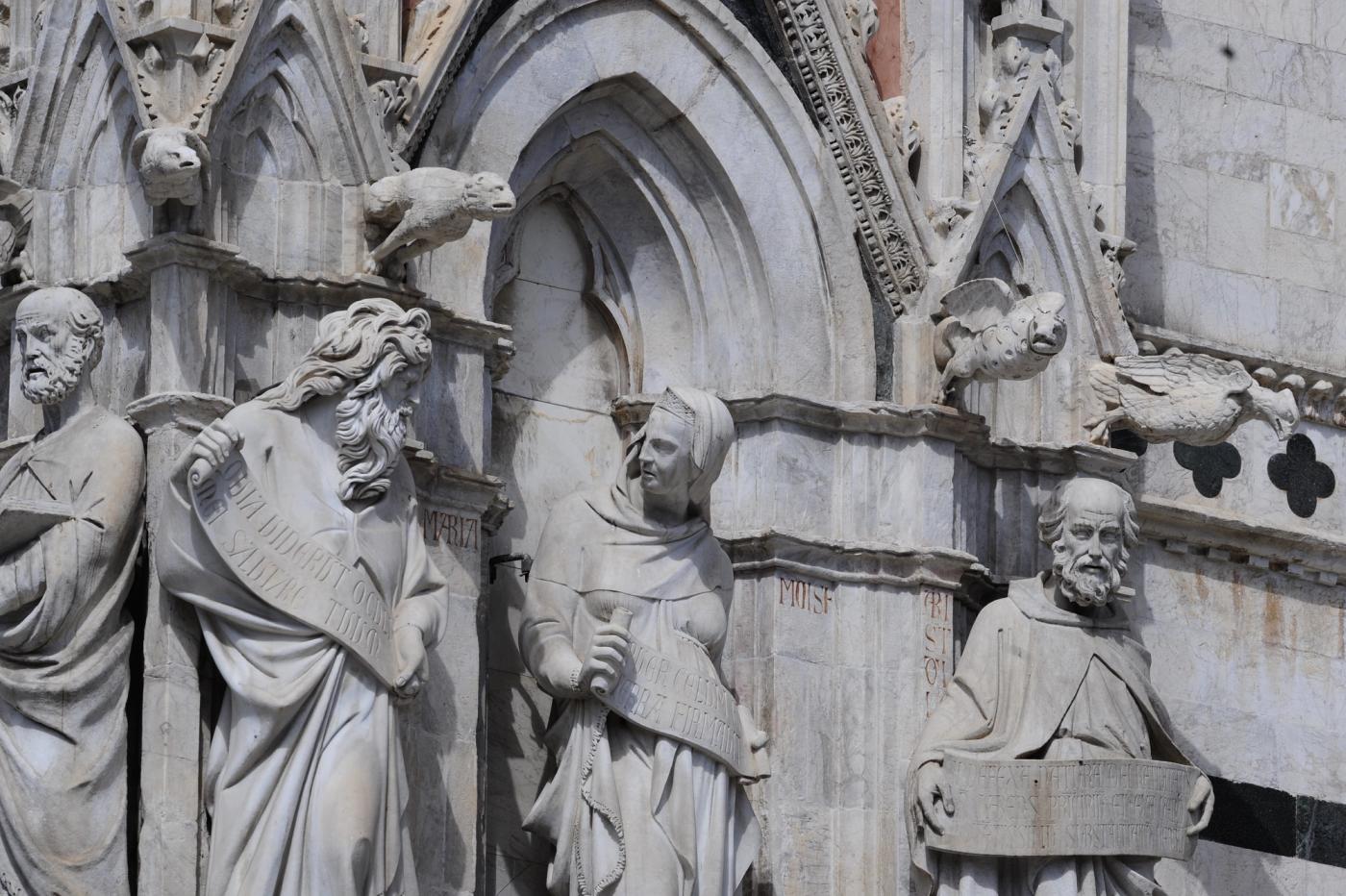
Below, above the lintels, are six half figures of two horses and two lions, a gryphon and a bull.
All the figures “talk and gesture, argue and discuss, crying out their prophecies.” John White. Miriam is the best: “in motion, open-mouthed, head turned, vibrant with energy.” The open, speaking mouth is found in many of the figures. Giovanni’s depth in the draperies, the detail in the figures, “(t)he breadth, the boldness, and the sensitivity…shine through the centuries of weathering.”
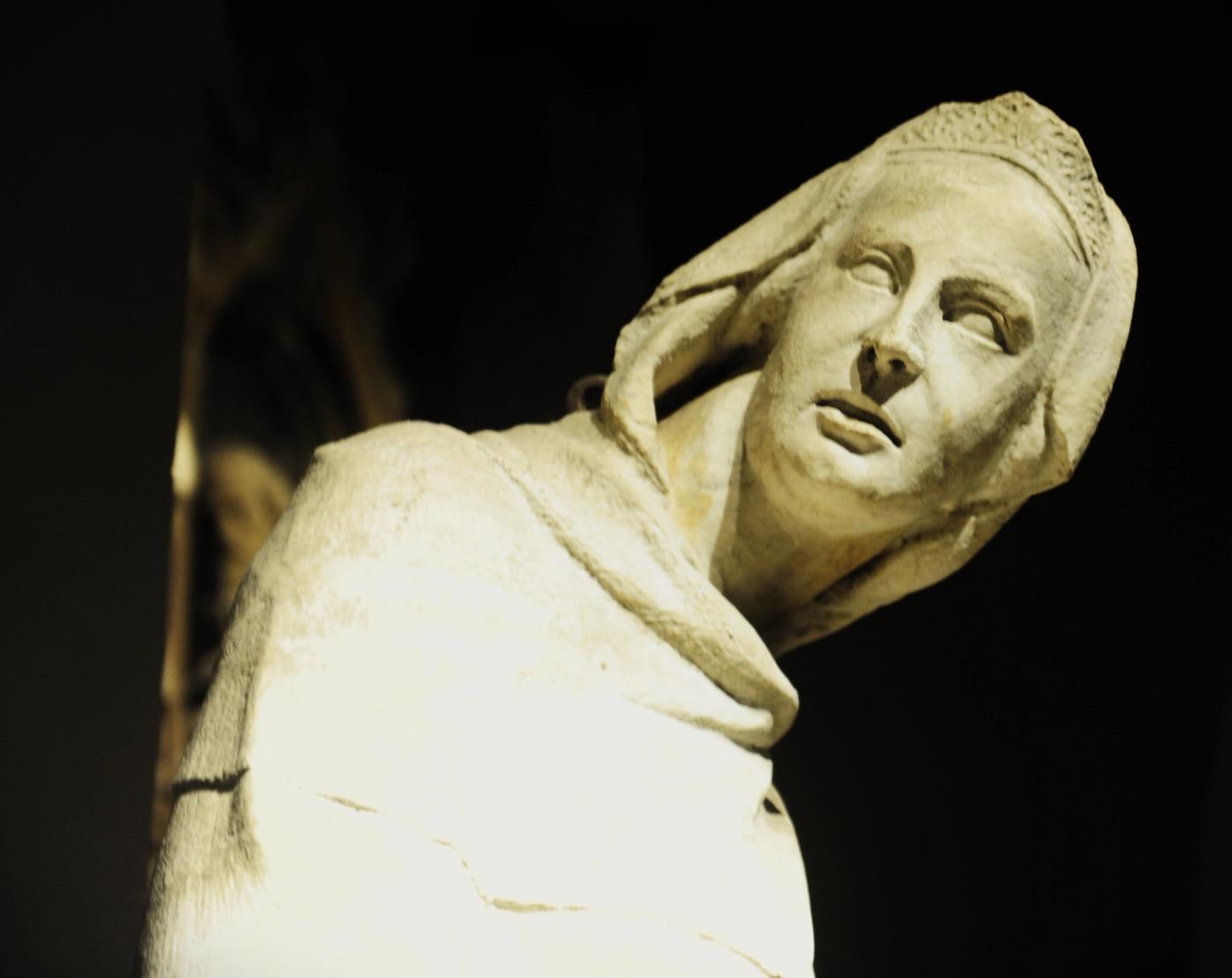
The statues suffered much through the centuries, a few were stolen (Haggai to the Victoria and Albert), some in such shape the remains were moved the crypt of the Duomo. Most were transferred to the Opera del Duomo. What we see today on the façade are replicas, all devoid of the detail and life that Giovanni imparted. The survivors in the Duomo remain breathtaking works.
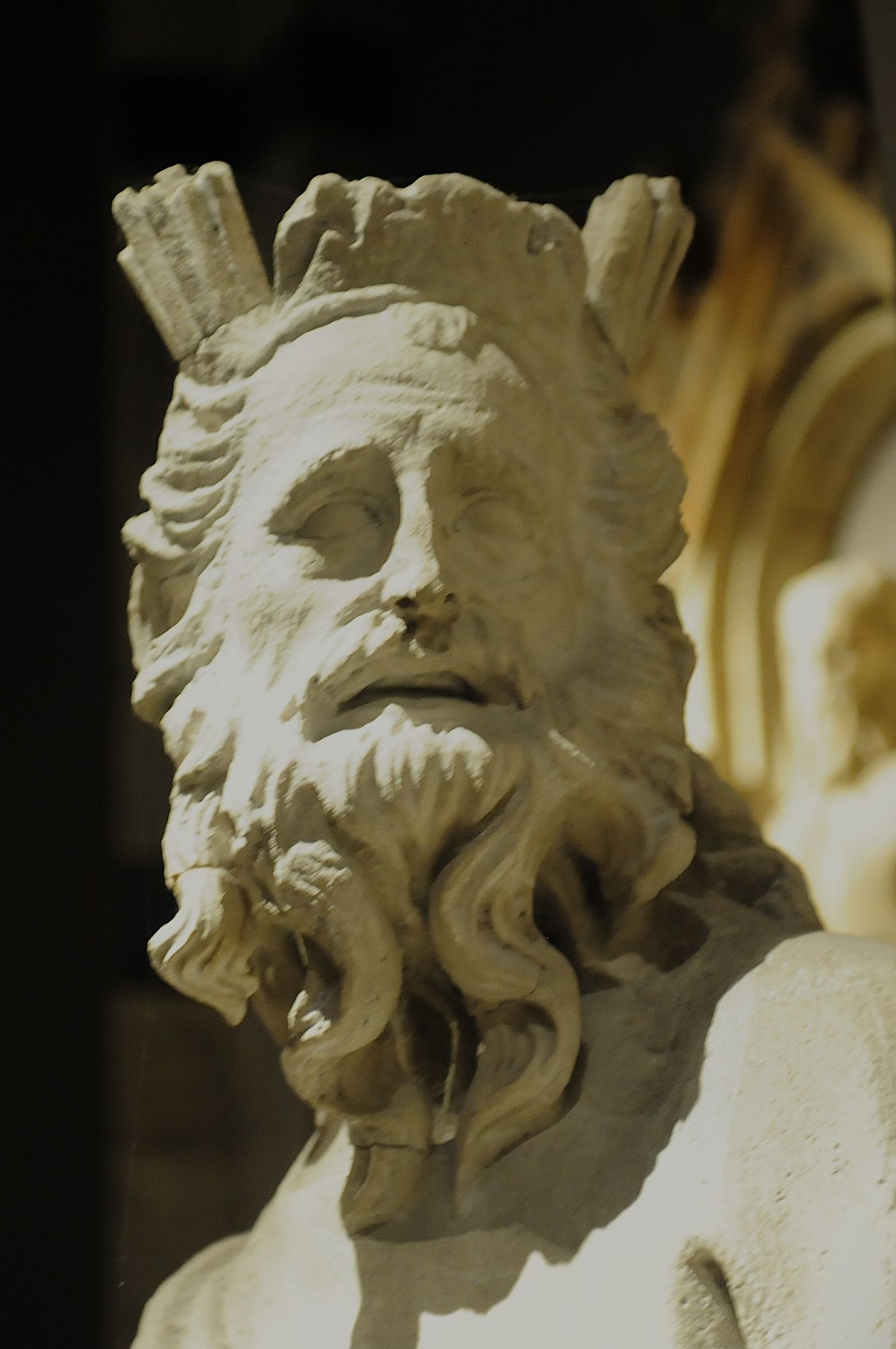
They are still alive with the spirit Giovanni gave them. These were the examples for Donatello, Ghiberti and Michelangelo.
Thank you for reading. If you found this useful, you might also enjoy the books.