The Cuirass of Augustus Prima Porta at the Vatican Museum
August 3, 2026 · 2 min read
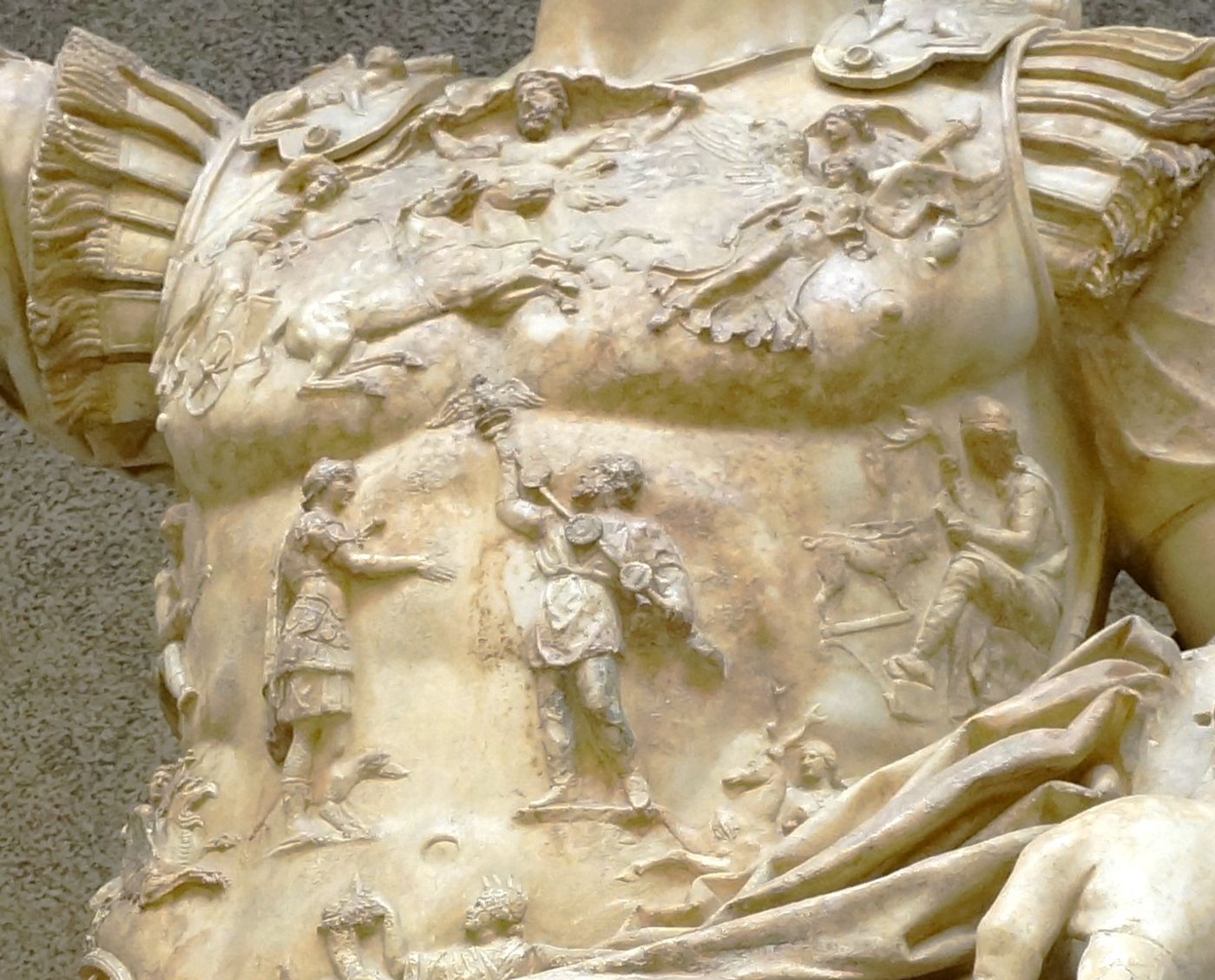
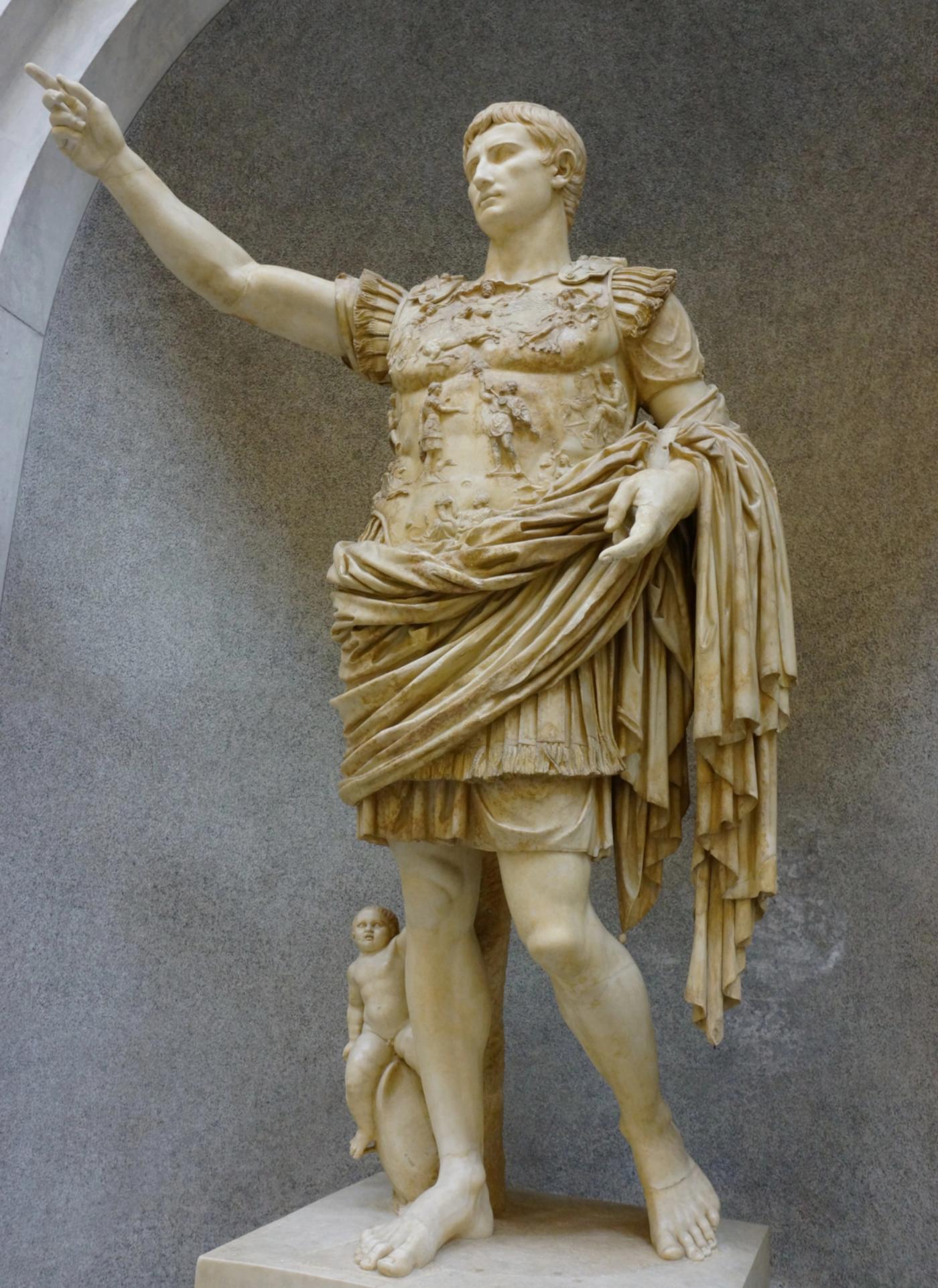
The Augustus Prima Porta is a marble copy of a first century BC bronze of Augustus, excavated in the nineteenth century at the Villa of Livia, Augustus’s widow.The villa was near the first entry to Rome on the Via Flaminia. The statue is now in the Braccio Nuovo at the Vatican Museums. It is an idealized portrait of Augustus in adlocutio addressing his troops, a magnificent paludamentum cloak around his hips. The most interesting aspect of the statue is the cuirass or breastplate, which has beautiful detailed reliefs, although Cupid on the dolphin at his feet is an interesting appendage signifying the Julian connection to Venus, the dolphin Augustus’ victory over Antony and Cleopatra at sea at Actium.
The breastplate commemorates Augustus’ retrieval in 20BC of the Roman standards lost by the Triumvir Crassus to the Parthians in the battle of Carrhae in 53 BC.We see as the two central figures the Parthian King Phraates IV surrendering the standards, identified through his tunic and baggy pants, and most probably receiving the standards Tiberius, who wears a cuirass, helmet, military boots, with a dog at his side representing the Roman army. There is an eagle on top of the standards, decorated with coronae and phalerae (military bosses). There are two sphinxes on Augustus’ shoulders, representing the defeat of Cleopatra.At the very top of the cuirass is Caelus the sky god, holding up a cloud or cloak representing the heavens, below him is Apollo in a four horse biga, chasing Aurora and Luna on the right.Then on the left is a figure of Hispania (sheathed sword) and on the left a female barbarian (unsheathed sword), both signifying Augustus’ military triumphs.Further down on the left is Apollo on a winged griffin playing his lyre and on the right Diana on the back of a stag.Terra Mater, Mother Earth, is at the bottom, holding Romulus and Remus and a cornucopia, signifying the prosperity that Augustus brought to the Empire. If we could get around to the back side of the cuirass we would find a carnyx (wind instrument) on the left hip, and also greaves (leg armor) leaning against a tree trunk.
Thank you for reading. If you found this useful, you might also enjoy the books.