The Cosmati Pavements in Rome
July 19, 2026 · 2 min read
The Cosmati 7.26
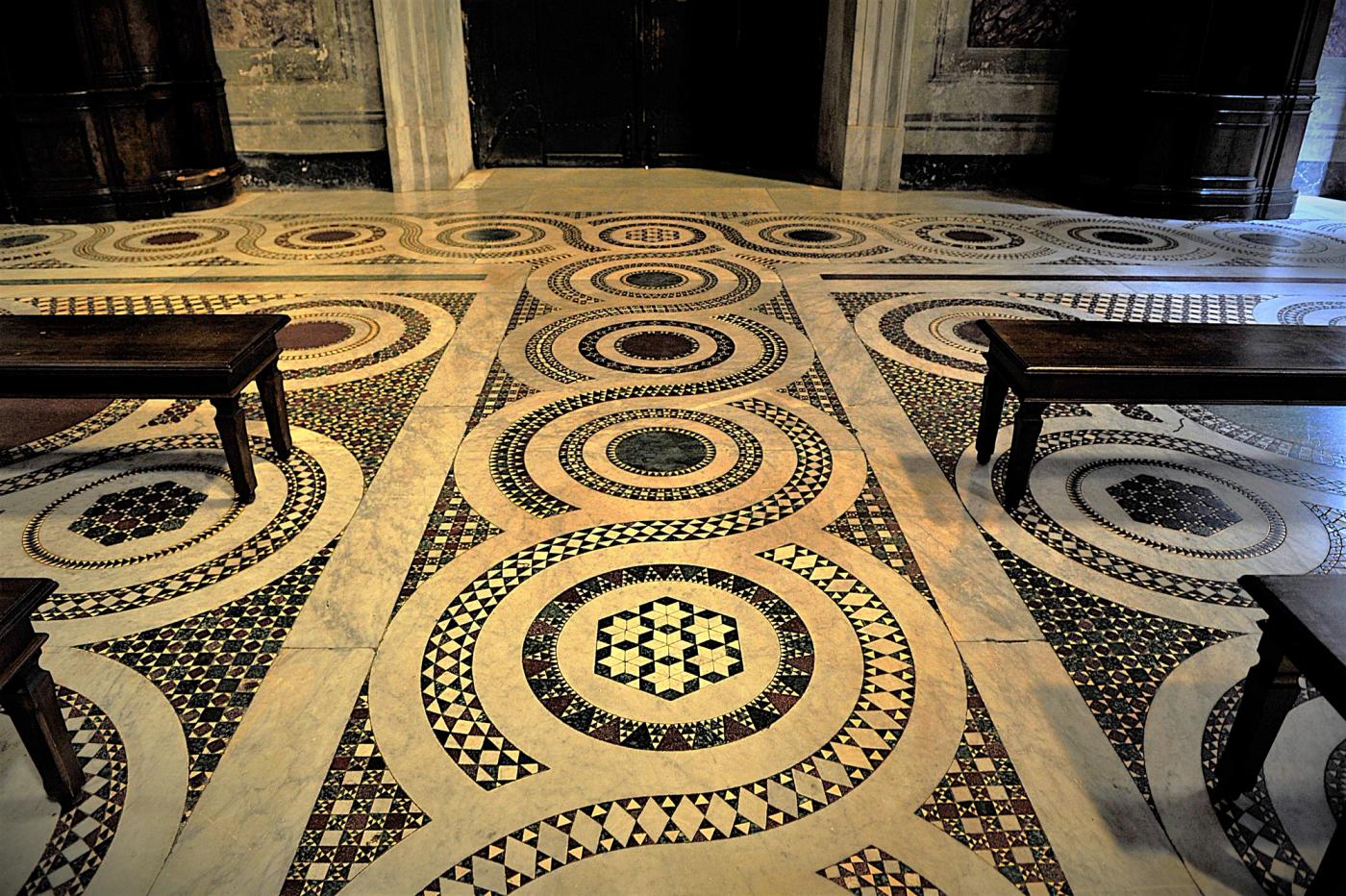
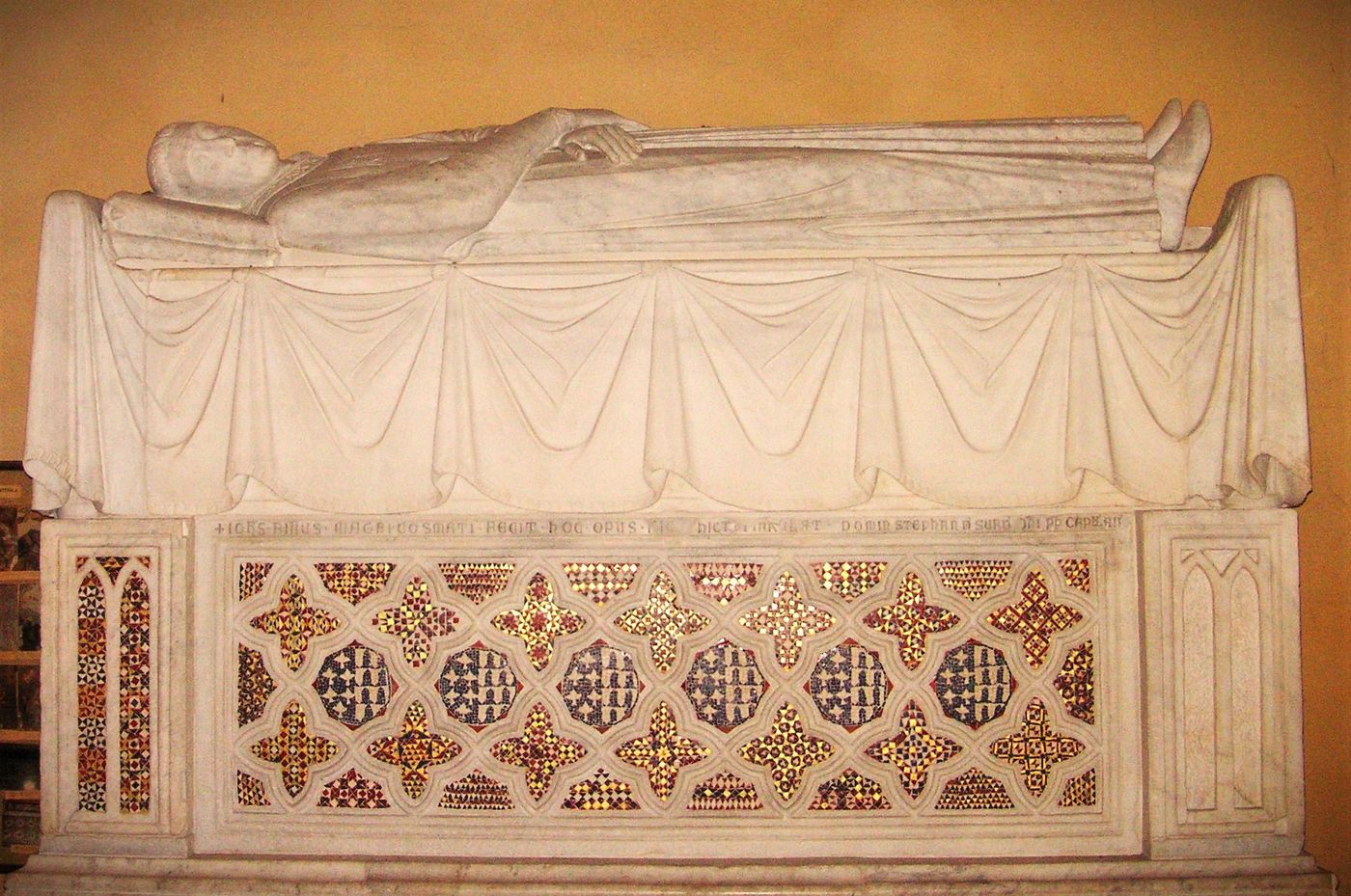
Many of Rome’s churches have Cosmati pavements.The Cosmati were stonecutters from the north, most from the Lago di Como. They were drawn to Rome in the eleventh through thirteenth centuries.There they found the abundant marbles they needed for their slicing and dicing. They were students of geometry, and made mosaics in every possible geometric form, most employed for church pavements, but also ambones, screens, candelabra, altars, baldacchini, and episcopa.Their two favorite forms were the quincunx and the guilloche.
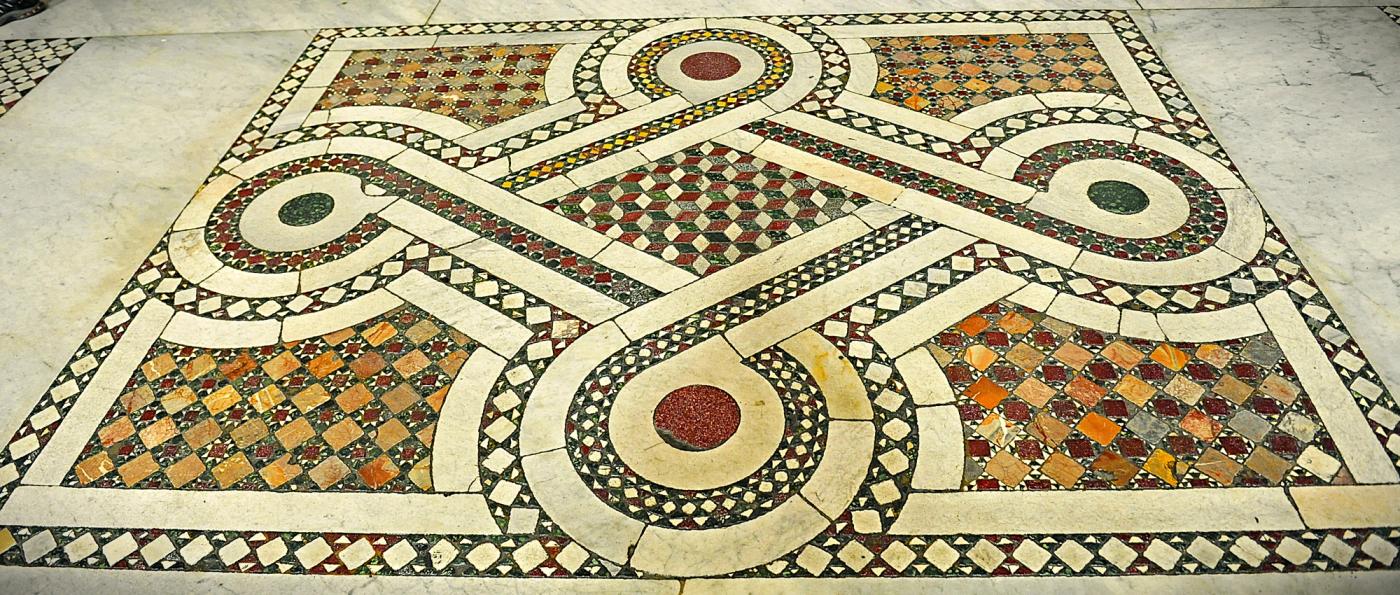
The quincunx was positioned in the place of honor, almost always on the longitudinal axis of the central nave, and was the central ornament for the pavement.The word quincunx comes from the latin quinque-five-and uncia-twelve, and according to Webster means an arrangement of five things in a square or rectangle with one at each corner and one in the middle.A quincunx must be seen to be understood.To begin with there are five roundels or rotae ideally of porphyry.In the classic form the one in the center is larger than the other four at the corners.The roundels are positioned in an imaginary square, positioned based on a double cross formed by the imposition of the diagonal cross of Saint Andrew (decussate) on the Latin cross.The diagonals are extended to the corners of the square, forming a “square asterisk.”The large roundel or rota is in the center while the smaller roundels are on the diagonals positioned in the corners so as to be tangent to the sides of the square.The origin of the “square asterisk” is debated; it may be based on the Chrismon of Christ, formed by the superposition of the first of the Greek letters for the Lord’s name, the Chi or X, on the second letter, Rho or P.
With the five roundels positioned, the Cosmati then linked them by means of a curving encircling band, like a snake, interlaced or flowing around each roundel and then disappearing underneath itself to connect again and encircle the next eyelet or roundel.
The other signature Cosmati motif was the guilloche, which often appeared on the central axis of the main nave, leading up to the quincunx or following it, or forming a perpendicular to it at its conclusion.It was generally enclosed in a long rectangle. The guilloche consists of two intertwined or interlaced curving sinusoidal strands proceeding on a vertical axis, encircling roundels or eyelets of porphyry or serpentine, with each strand passing under the other in alternation as they curve around the eyelet.The guilloche could be a mixed guilloche where the roundel alternated with a square or rectangle.In this form it often adorned the predella of an altar or a cornice as in a cloister.
Thank you for reading. If you found this useful, you might also enjoy the books.