The Cosmati mosaicwork at San Clemente
October 26, 2026 · 2 min read
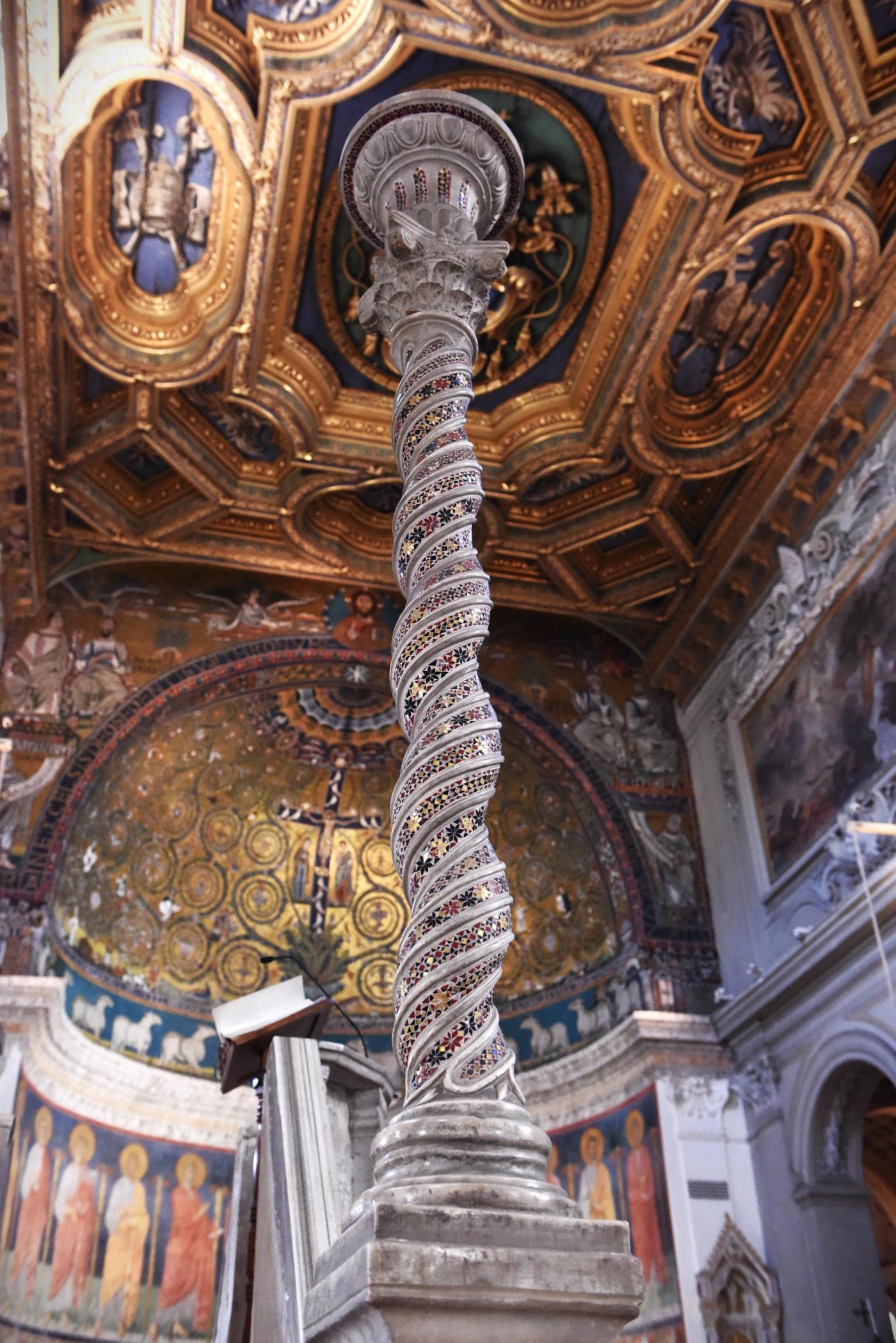
Rome possesses the world’s only treasure trove of Cosmati mosaics. The Cosmati, the marmorari romani, were stoneworkers who came to Rome from the North, from Lago di Como.Their precious mosaic work, much in pavements, is called Cosmatesque, named for one of the principal families, the Cosmatus. The mosaic artisans of the XIIth and XIIIth centuries anticipated the Renaissance of the XV century, combining the Lombard and Gothic styles with the “classical spirit and tradition” of the Roman. Edward Hutton. To these the Cosmati added the Byzantine, Carolingian, and Arabic. The classical gives “regular partitions of the plane,” from the Byzantine come “sinusoidal intertwinings,” and from the Carolingian “chessboard patterns,” and from the Arabic “acute, sharp and abrupt angles.”Pajares-Ayuela.
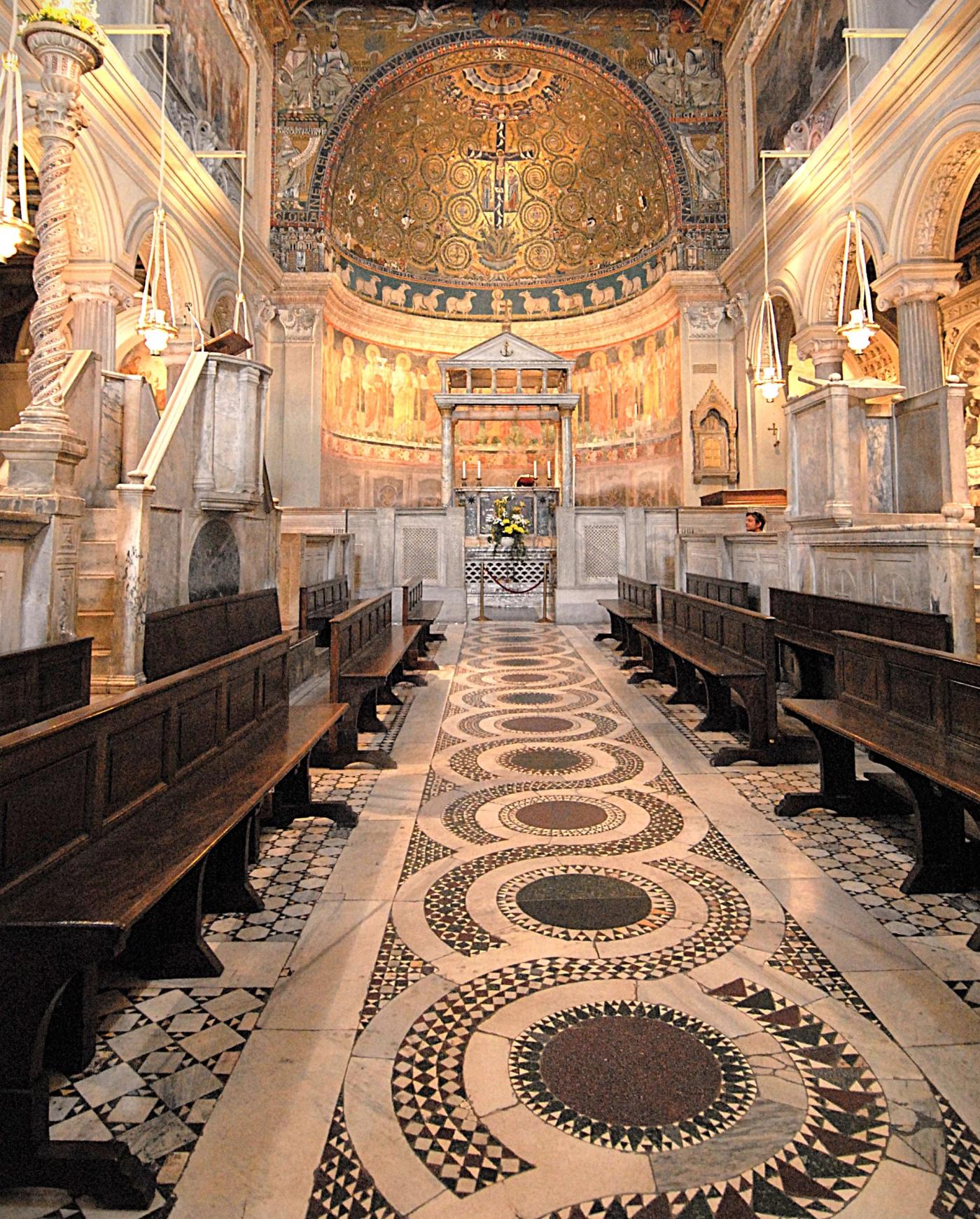
The Cosmati found in Rome what they needed most for their mosaics and the tesserae pieces—marble.Their designs were centered on large roundels of porphyry, and around these they wound mosaic strands of the guilloches and quincunxes, all made with spoliated marble materials from the thousands of buildings in ruin in Rome.
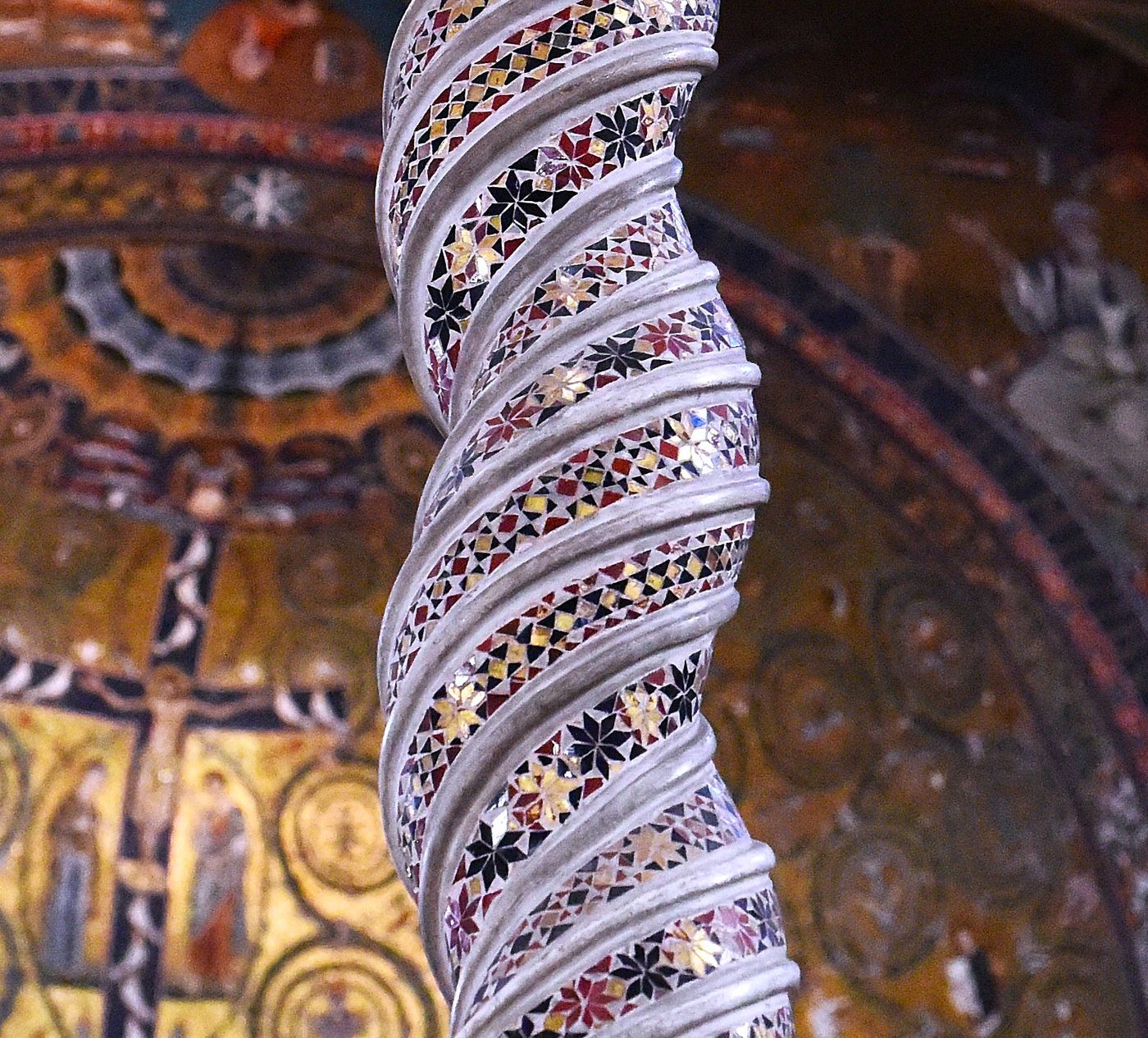
The Cosmati were geometrists: we find throughout their works chevrons, darts, eyelits, four-pointed stars, herringbones, honeycombs, hourglasses, imbricated, inscribed, interlaced, interloped, inverted, octagon (oblong and stellate), lattice-work, hexagons, oblongs, hexagons rows of x’s, rows of y’s, poised, racked, saltire, sawtooth, isoceles triangles, triangles, stars, and triaxial patterns. They were also chromaticists, their favorite colors red, green, yellow and white.
At the Clemente we have the best of the Paschal Candelabra, made to hold the Easter Candle. The unique Roman Cosmati Candelabrum consisted of a twisted column decorated with mosaic, crowned with a capital bearing saucer, possibly copied from the pagan.
We also have at Clemente in the schola sanctorum one of the best Cosmati guilloches—a liner pattern arranged with interlacing.The interloping strands create circular interspaces, creating a “guilloche of eyelets.”
We also have the best of the Tabernacoletti at the Clemente. This is a tabernacle right of the Tribune said to be for relics, but I believe used for the holy oils. Here we find two twisted miniature columns supporting a pediment, Gothic ornamentation atop, Cosmati mosaic work on the columns and the tympanum. The special feature is the tiny little reigning Pope Boniface VIII presenting to the Madonna and Child his nephew Cardinal Caetani, the archpriest here in 1299, sculpted by the Renaissance pioneer Arnolfo di Cambio.
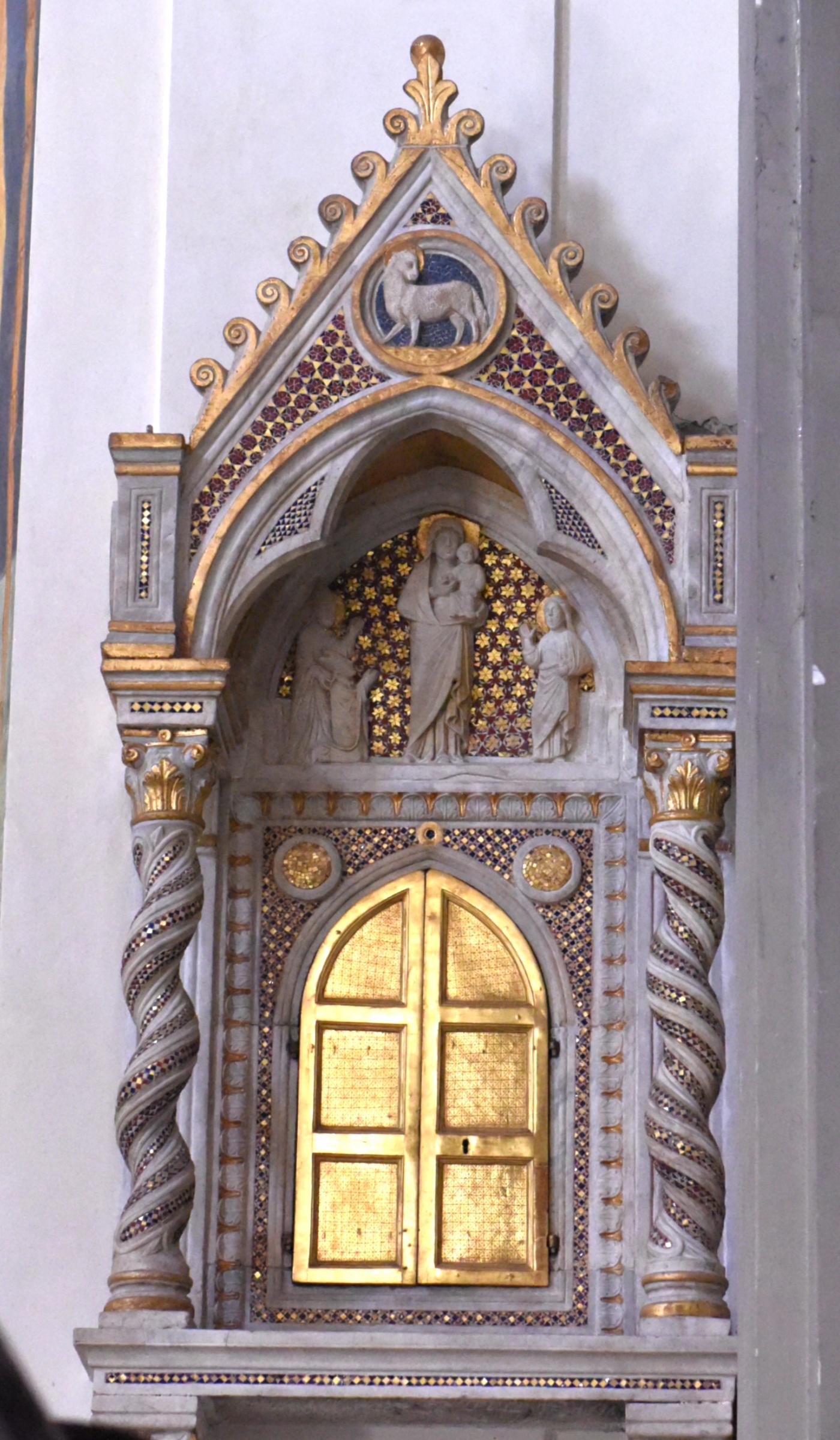
This is some of the last Cosmati work before the Babylonian Captivity of the Papacy in Avignon brought an end to the Roman work of the stonecutters from the North.
Thank you for reading. If you found this useful, you might also enjoy the books.