The Cosmati Mosaic of Jesus Freeing the Slaves at San Tomasso in Formis
September 18, 2026 · 2 min read
Trudging down the San Paolo dei Crucifici from Giavanni ed Paolo to the top of the Coelian hill, we see from a distance the Arch of Dolabella, the entrance through the ancient Servian Republican wall made by the Consuls P. Cornelius Dolabella and C. Junius Silanus in 10 A.D., also called the Porta Celimontana, for the nearby villa.
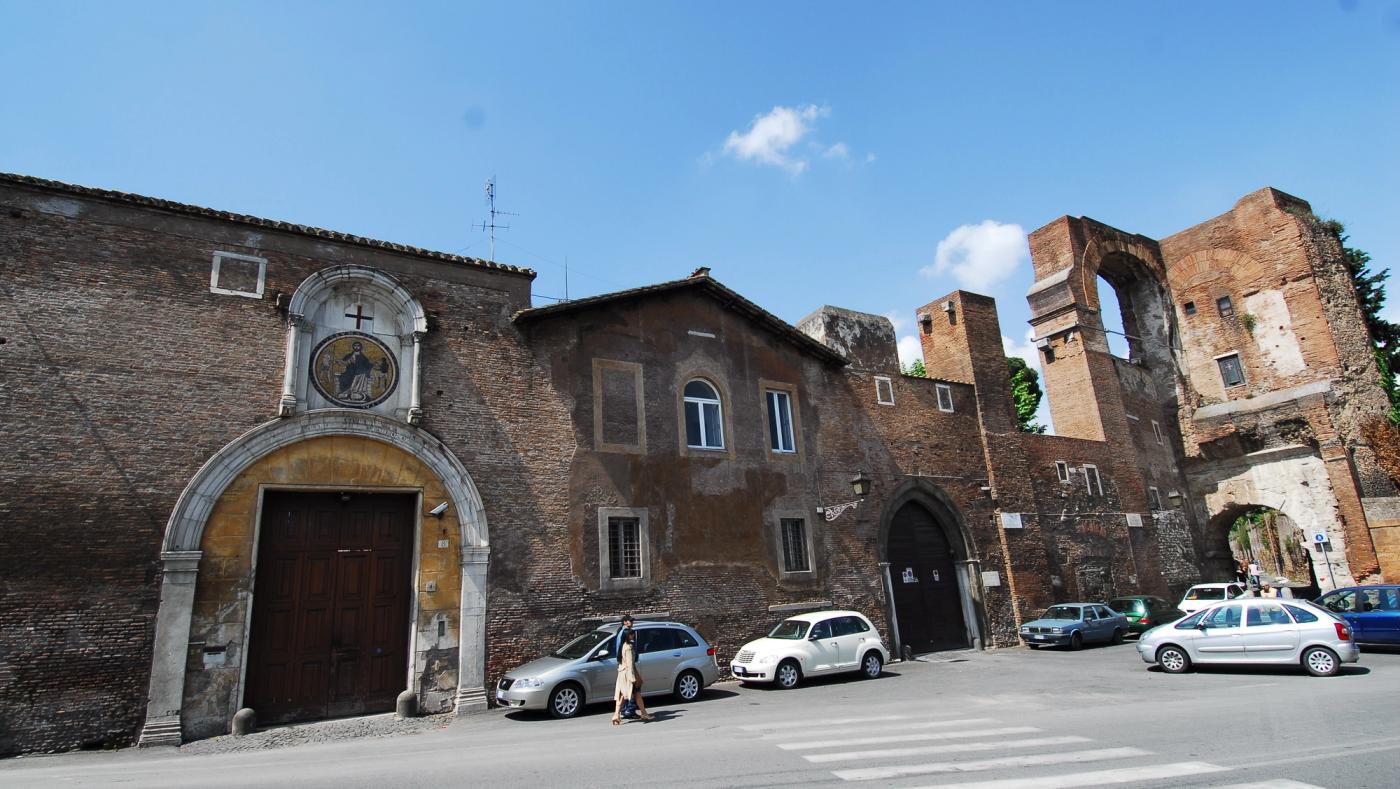
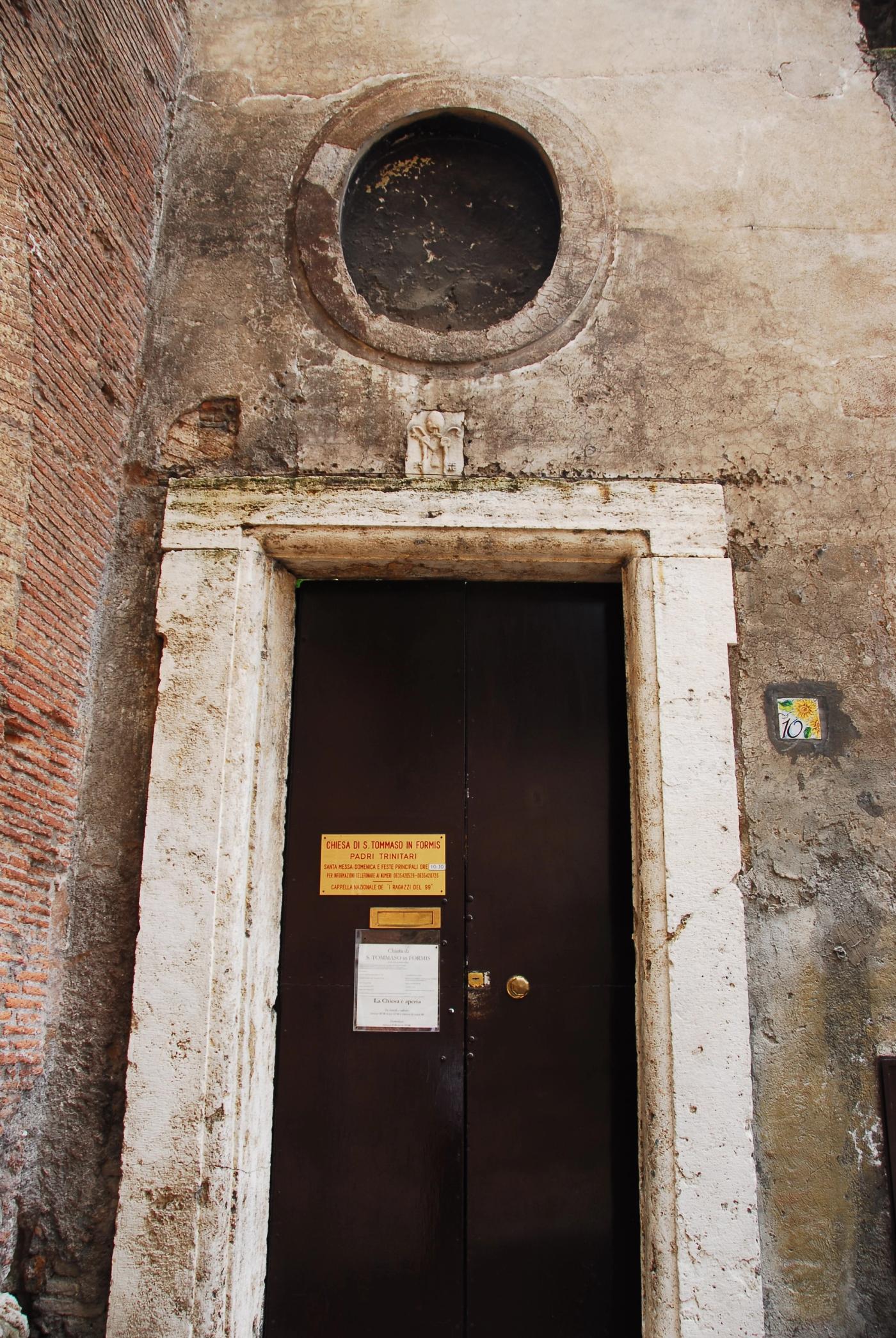
Next to the arch is the present entry to church of Tomasso in Formis, formis being the Roman word for the structure of an aqueduct.
The French theologian Giovanni de Matha saw a vision of an angel in white when he elevated the host in his first mass as a priest in 1197. The angel had a red and blue cross on his breast, with his hands in benediction on the heads of two slaves, one a white European the other a black Moor.The Bishop of Paris sent de Matha to Rome to tell Pope Innocent III (1198-1216) of his vision.The Pope as it happened had the same dream, which the Pope saw as a divine instruction to free the slaves held by the Muslims in North Africa. Innocent thereupon established the Order of the the Trinitarians., the order dedicated to the Most Holy Trinity, it’s motto, “Glory to You, O Trinity, and freedom to the captives.” The Pope gave the saint the property next to the Arch of Dolabella and the ruined aqueduct for his convent and church.de Matha established a monastery and hospital here, the hospital now lost to the Institute for Plant Nutrition! De Matha spent the rest of his life freeing slaves.On one of his trips to Africa he brought back 120 souls from Tunis, buying their freedom with funds he raised in Rome and France.On the return voyage the ship lost both helm and sail in a great tempest, but all were saved when the saint knelt the entire time at the foot of the crucifix.
There is a small room in the arch behind the window marked with the Trinitarian red and blue cross which Saint John of Matha used as the nucleus of his tiny hermitage from 1209 until his death in 1213. He was buried in the church, but in 1655 his remains were translated to Madrid.
The church is small and beautifully bathed in white, open only for Sunday mass.
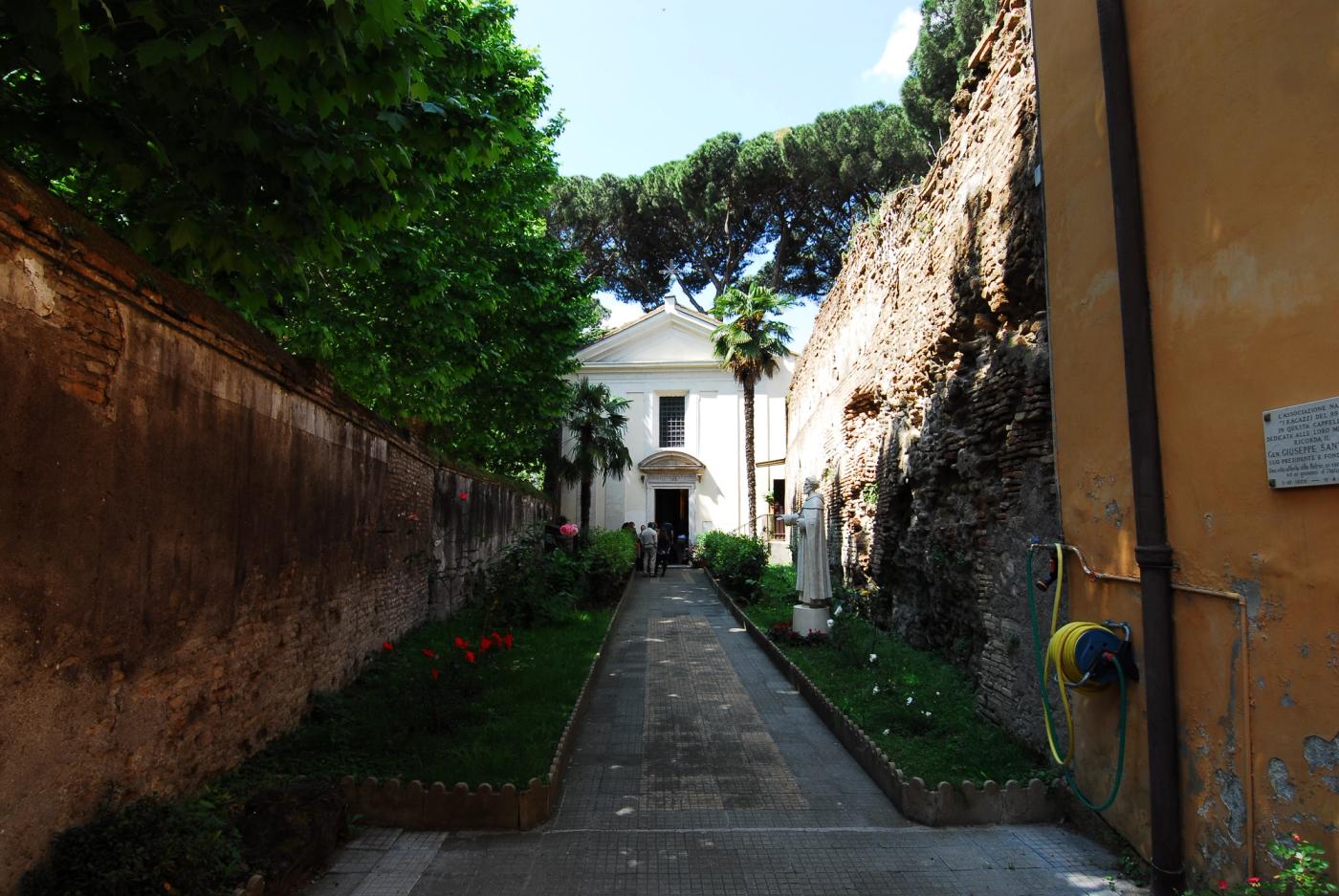
The greatest jewel here is not in the church at all.
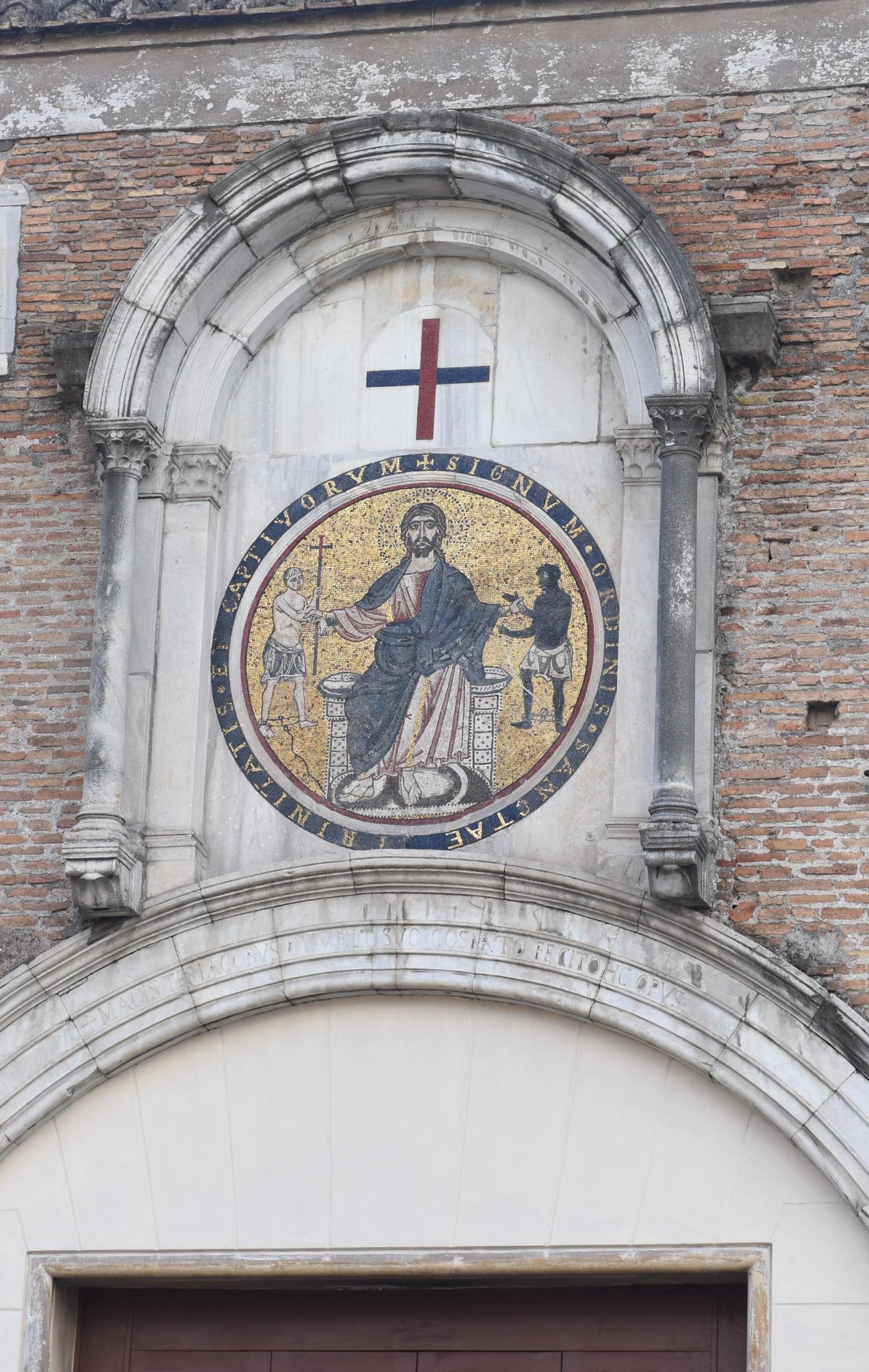
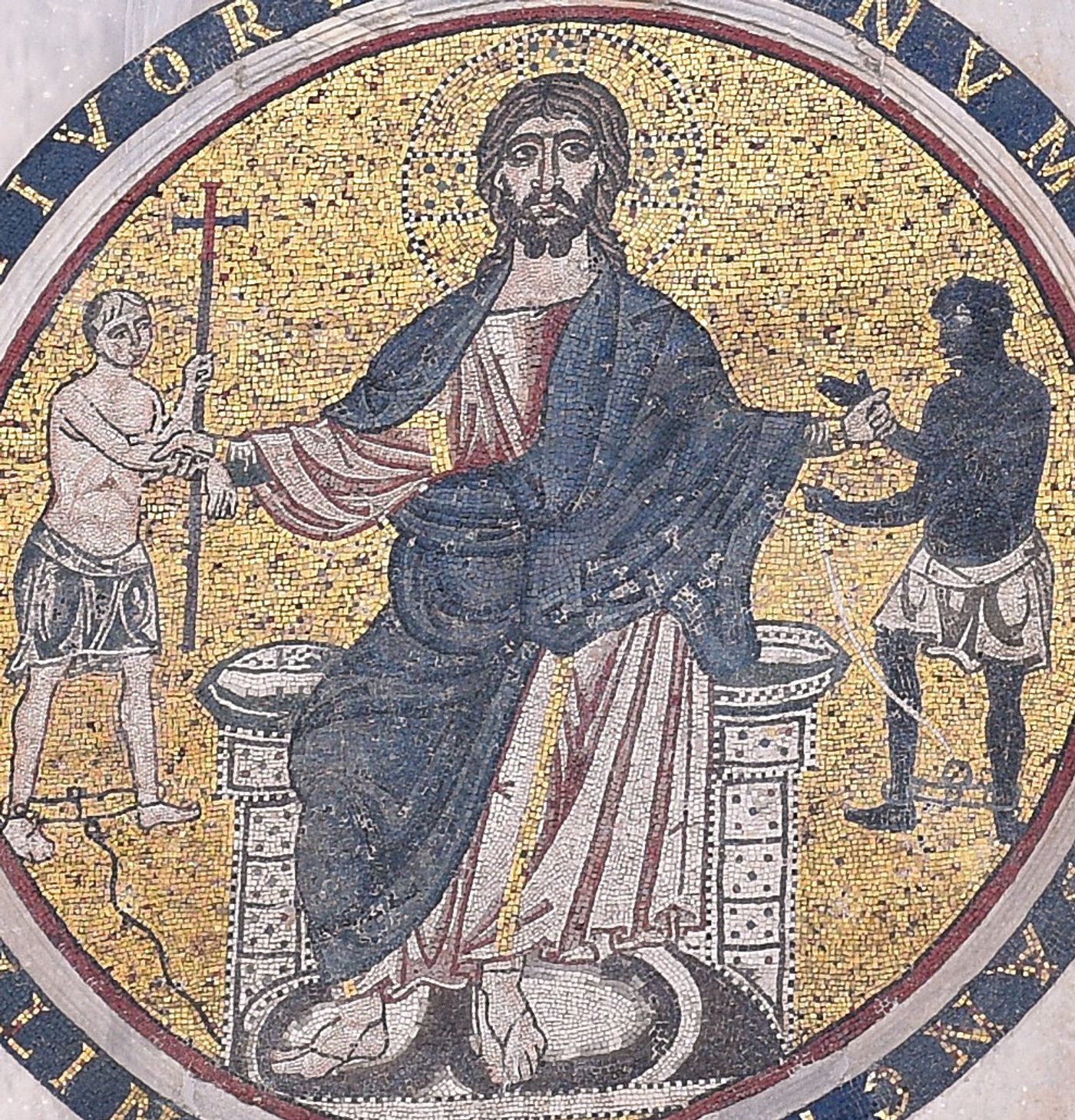
When the church was built in the time of the Cosmati in the twelfth century, there was a portal to the hospital on the east side, in what is now the mammoth brick wall facing onto the busy street and the Piazza Navicella.Here the Cosmati made the famous wall mosaic of the Freed Slaves, one black, one white, Jesus firmly holding the arm of each, no the emblem of the order. The inscription reads: MAGISTER JACOBVS CVM FILIO SVO COSMATO FECIT HOC OPVS.
Thank you for reading. If you found this useful, you might also enjoy the books.