The Chigi Chapel at Santa Maria Della Pace
July 19, 2026 · 2 min read
The Chigi Chapel at Santa Maria in della Pace--Raphael and Cortona
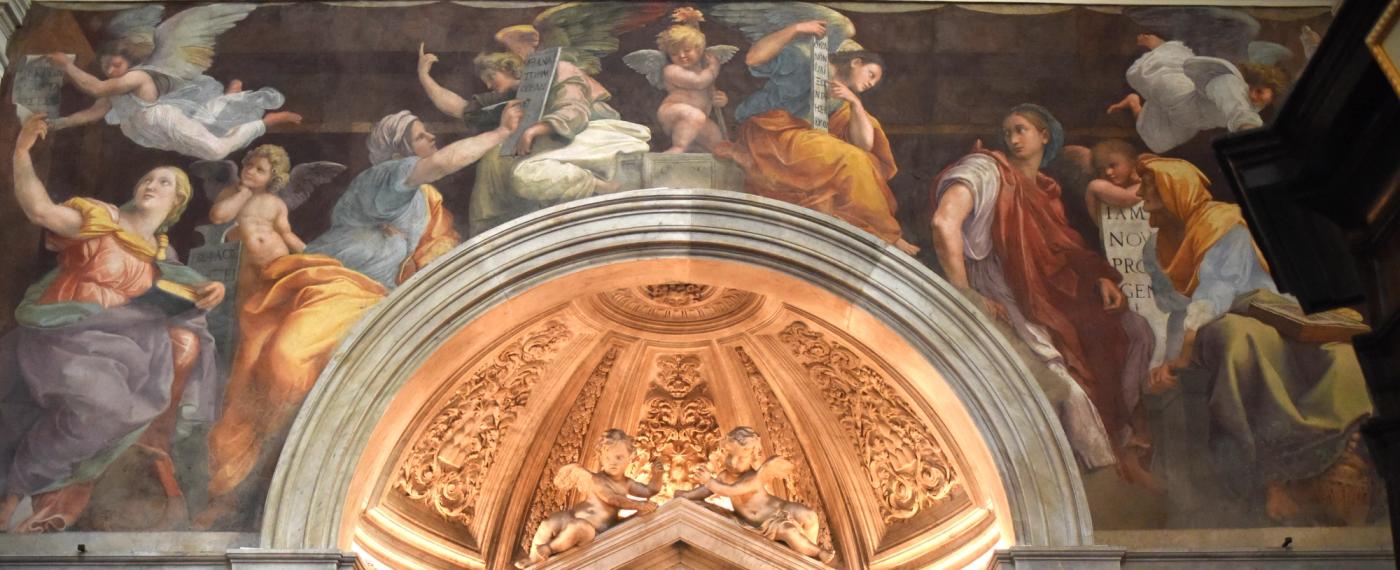
Agostino Chigi, the great Sienese banker (1466-1520), purchased the first chapel on the right in the new church of Santa Maria della Pace that had been put up by Sixtus IV Rovere (1471-1484) to celebrate peace with the Medici, and engaged his friend Raphael di Urbino (1483-1520) to create a fresco of the sybils. The sybils were prophetesses or oracles in Greek mythology. There was first only one at Delphi, this grew to ten by the first century BC, each named for its locality. Christians were quick to adopt the sybils as heavenly messengers.
Raphael (or Chigi) chose for his sybils Cumana, Phrygia, Persica, and Tiburtina. Cumana was thought to have predicted the Nativity in a stable, Phrygia the Resurrection, Persica the coming of the Messiah, and Tiburtina the Passion of our Lord. Raphael painted his sybils in 1514 after Michelangelo finished his magnus opus in the Sistine. Michelangelo was effusive in his praise of Raphael's work here, and after Chigi inquired of him as to the reasonableness of Raphael's charge of 400 ducats, told the banker that he should have been charged twenty-fold that sum.
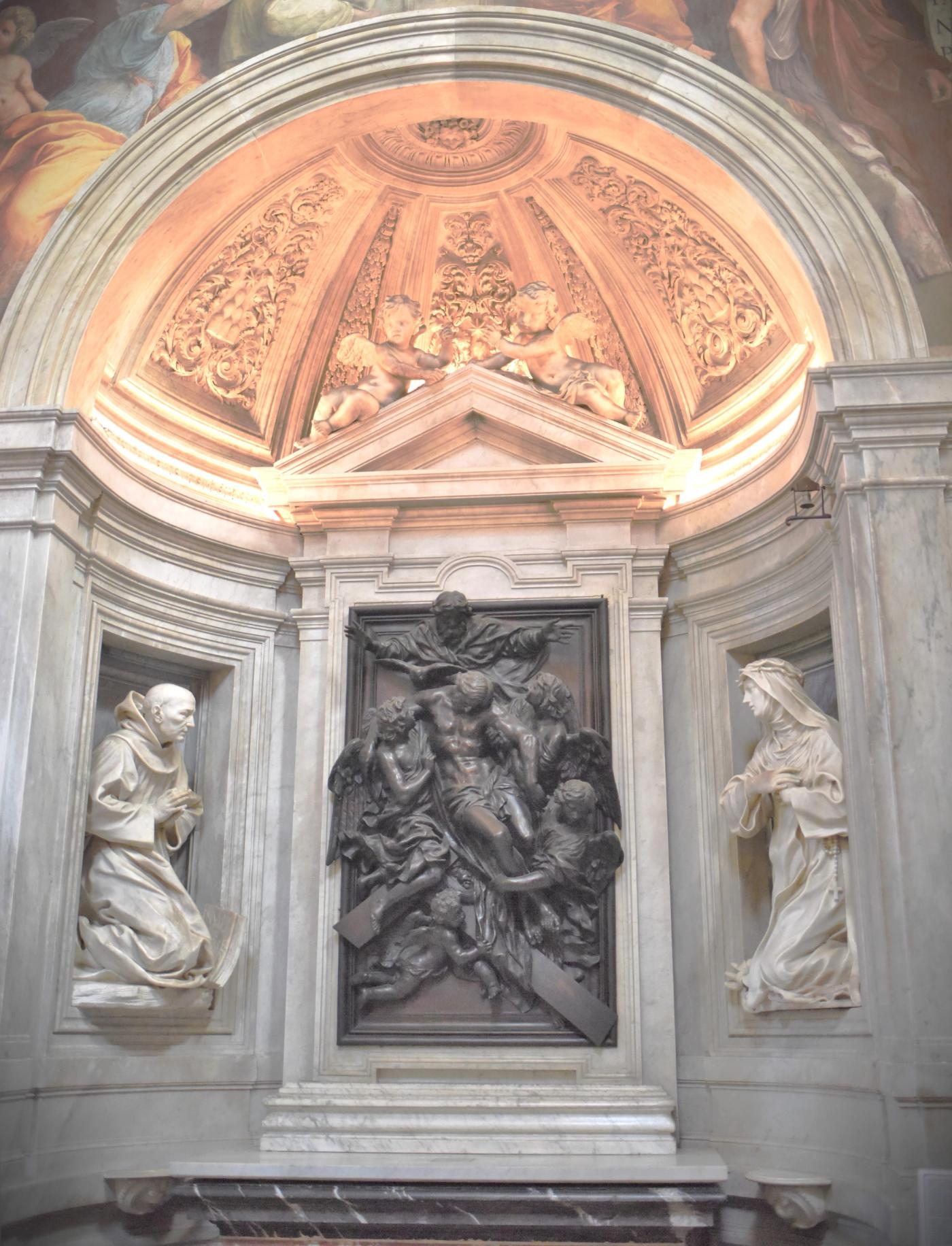
Two hundred years later another Chigi came to the church, Fabio Chigi, Alexander VII (1655-1667).He engaged Pietro da Cortona (1596-1669) to remake the church and the lower part of the Chigi Chapel (below Raphael’s sybils). The mensa was made in deep red marble. The niche has an aedicule with a pointed pediment, framed by half pilasters and rectangular niches to each side, while the vault has bands of campunelas (bellflowers) in the three panels populated by the Chigi emblem of six mountains and acanthus. Cortona made the drawings for the sculptured saints, both from the Pope’s native city of Siena: Bernardino and Catherine, and the central relief of the Throne of Grace.The Throne was cast in bronze, executed by Cosimo Fancelli (1620-1688) (from Bernini’s school). Fancelli also made the Catherine. Antonio Raggi (1624-1686), a Bernini protégé, made the Bernardino. The scene of Bernardino and Catherine adoring the dead Christ is found nowhere else.
The Chigi Chapel here is very high on the list of the best chapels in Rome, as is the Chigi Chapel at the Popolo. Seldom do we have two of the greatest masters in the same chapel, here one from the Renaissance (Raphael) and the other from the Baroque (Cortona).
Thank you for reading. If you found this useful, you might also enjoy the books.