The Basilica of San Bartolomeo on the the Tiber Island
August 25, 2026 · 1 min read
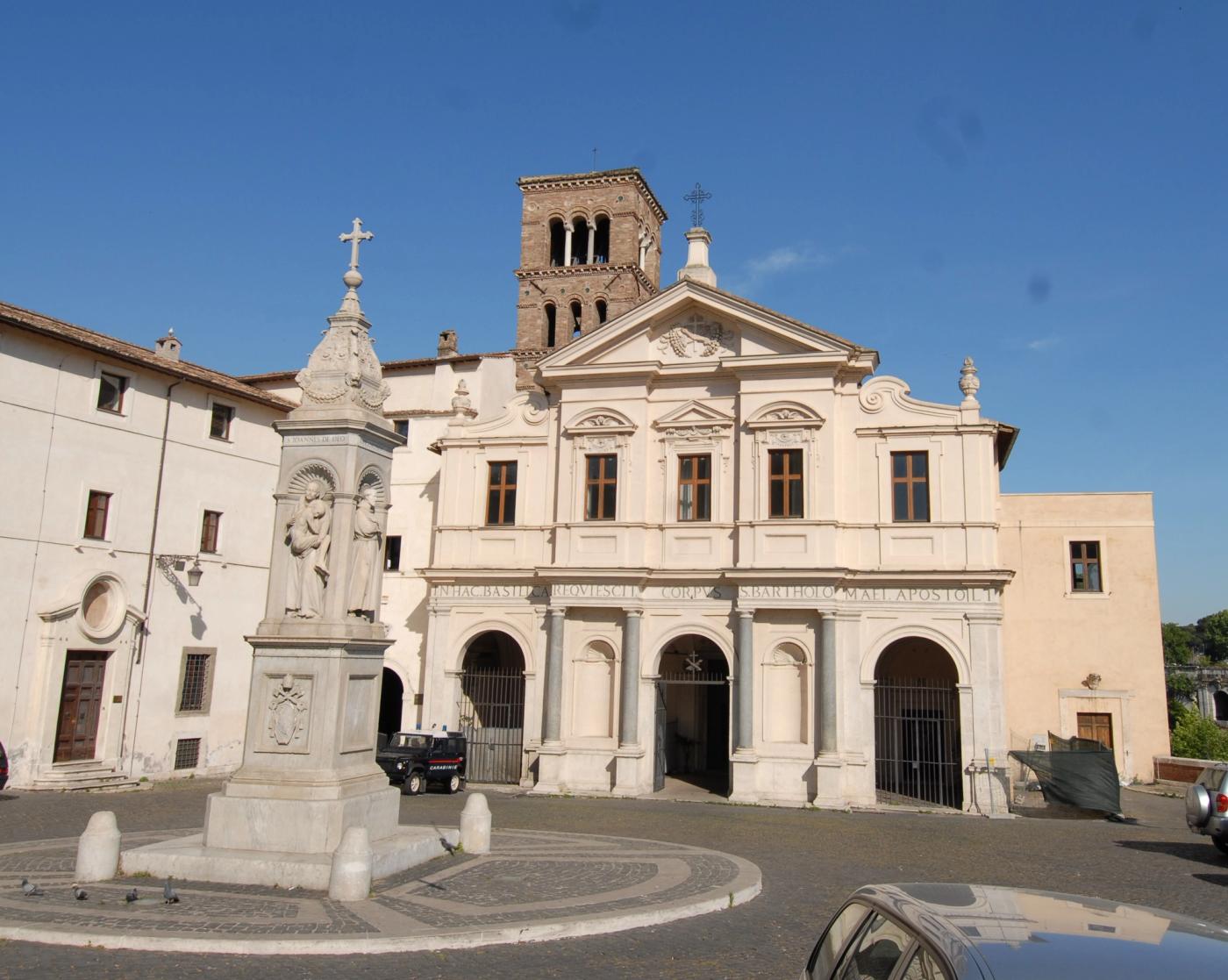
The evangelizing Saint Bartholomew was martyred in Armenia—flayed, as we know from the Golden Legend and Michelangelo’s Giudizio at the Sistine. His feast day is August 24. His relics were moved by the Christians to Dara in Mesopotamia.After the Persian invasion of the Byzantine Empire, the Apostle’s body was moved to the Bosphorus, where it was placed in a coffin and put to sea. It landedon the Tyrrhenian Sea Island of Lipari , where a grand tomb church was built for him.The Muslims based in Sicily destroyed the Liparian Church in the ninth century, about the same time as they sacked Saint Peter’s and Saint Paul’s. and scattered the Saint’s bones.A pious and brave monk gathered them up and took them to Benevento.
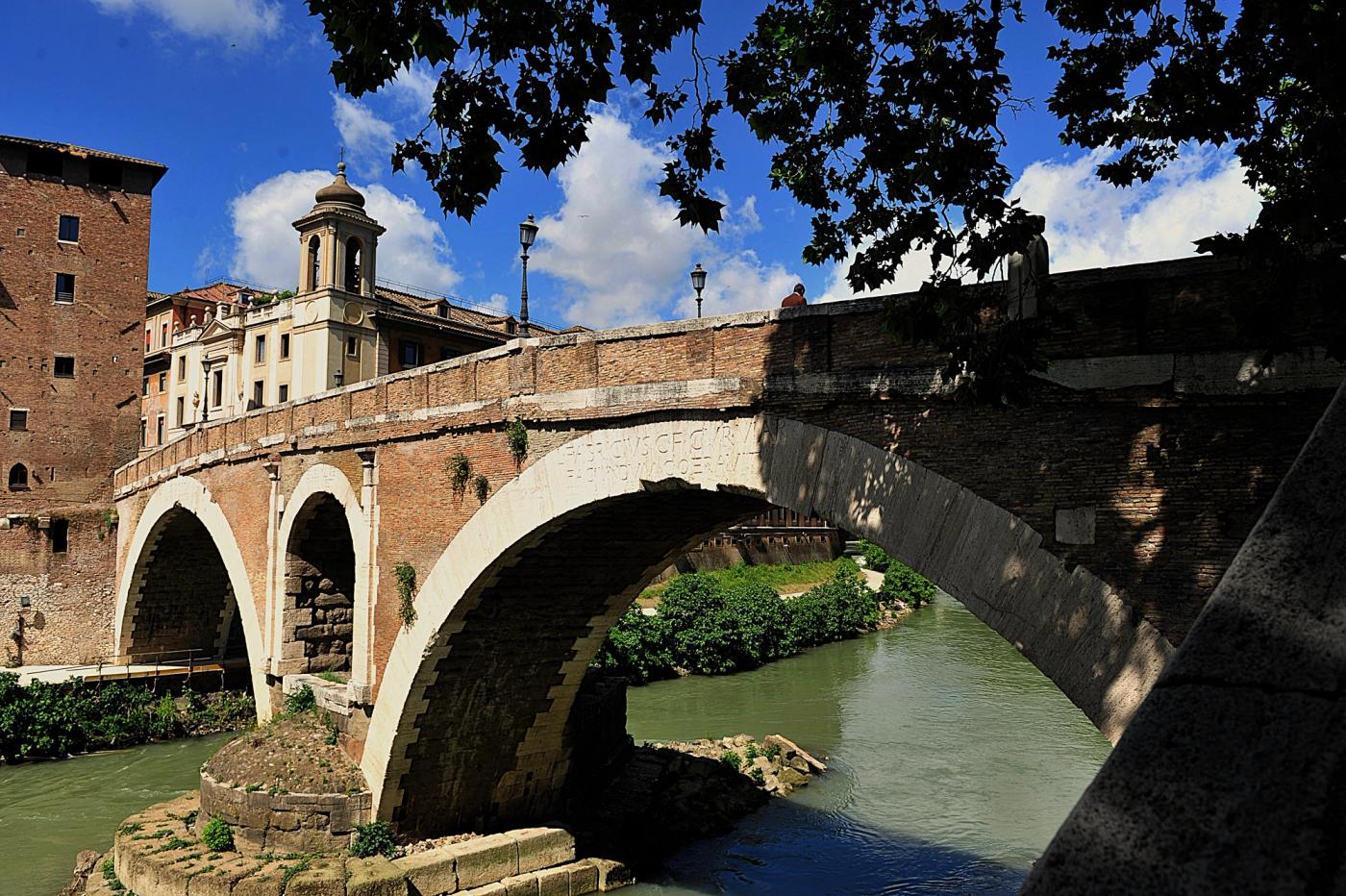
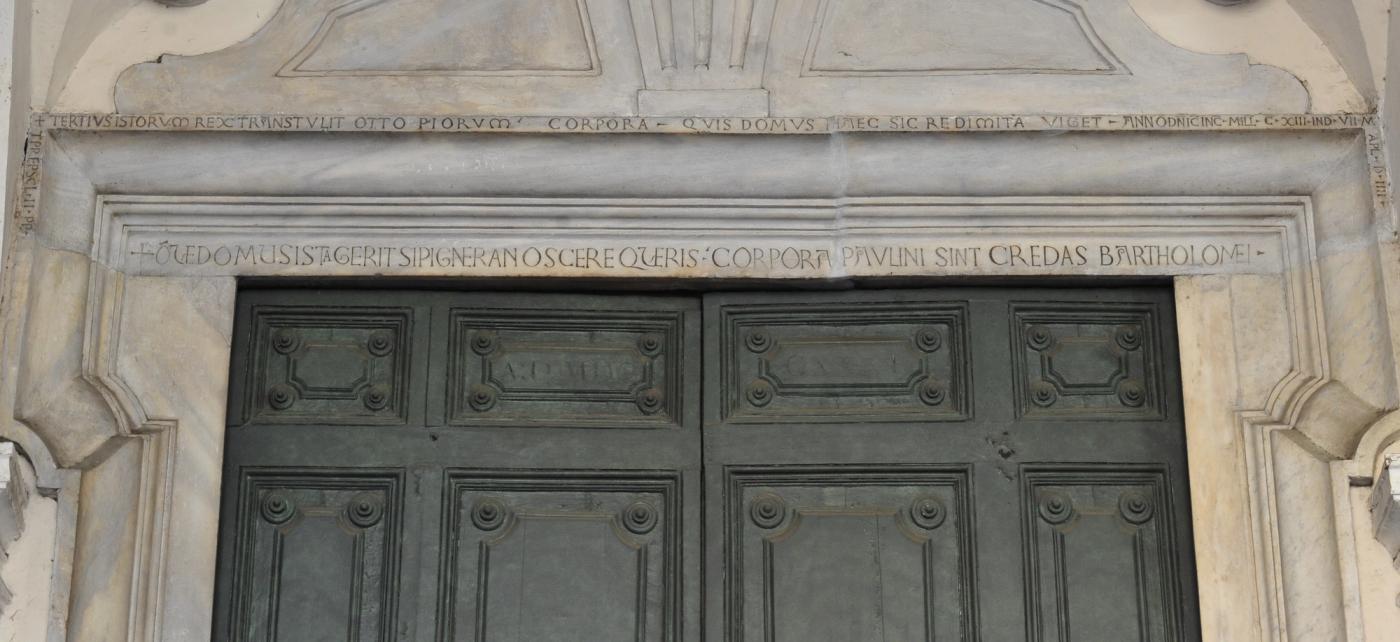
The German Emperor Otto III in his travels around Italy at the end of the tenth century came upon the relics of Saint Bartholomew in his stay at Benevento. He decided to take the Saint’s relics to Rome for proper veneration. There he joined with the relics of his friend and martyr Saint Adalbert, for whom he was building a church on Tiber Island, using the remains of the Temple of Aesculapius. Otto then learned that the Beneventans had deceived him and sent the relics of Saint Paulinus of Nola instead of those of Bartholomew.He returned with an army to Benevento and this time obtained the real remains of the Saint. In medieval times, Saint Adalbert’swas renamedfor the Apostle.
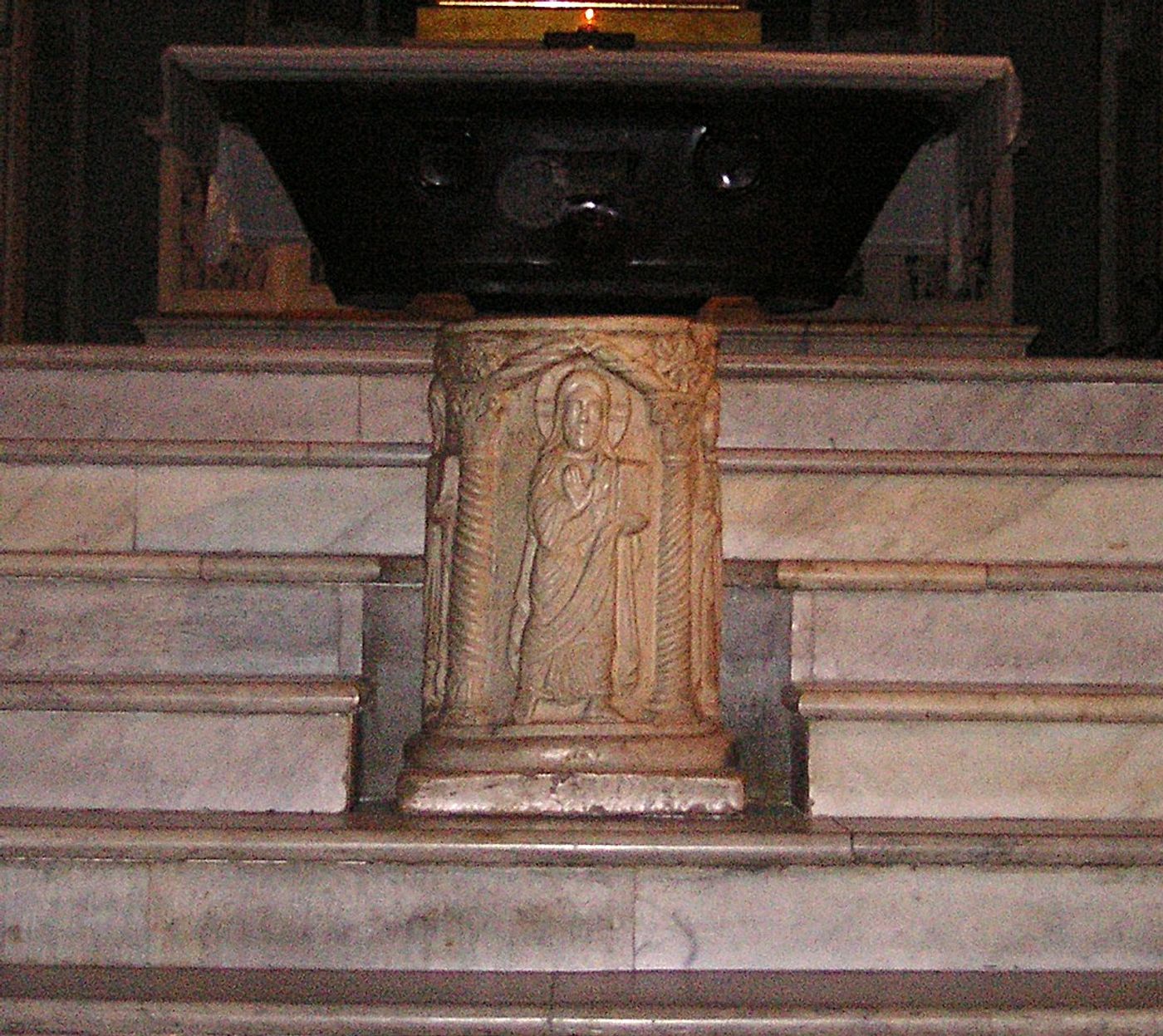
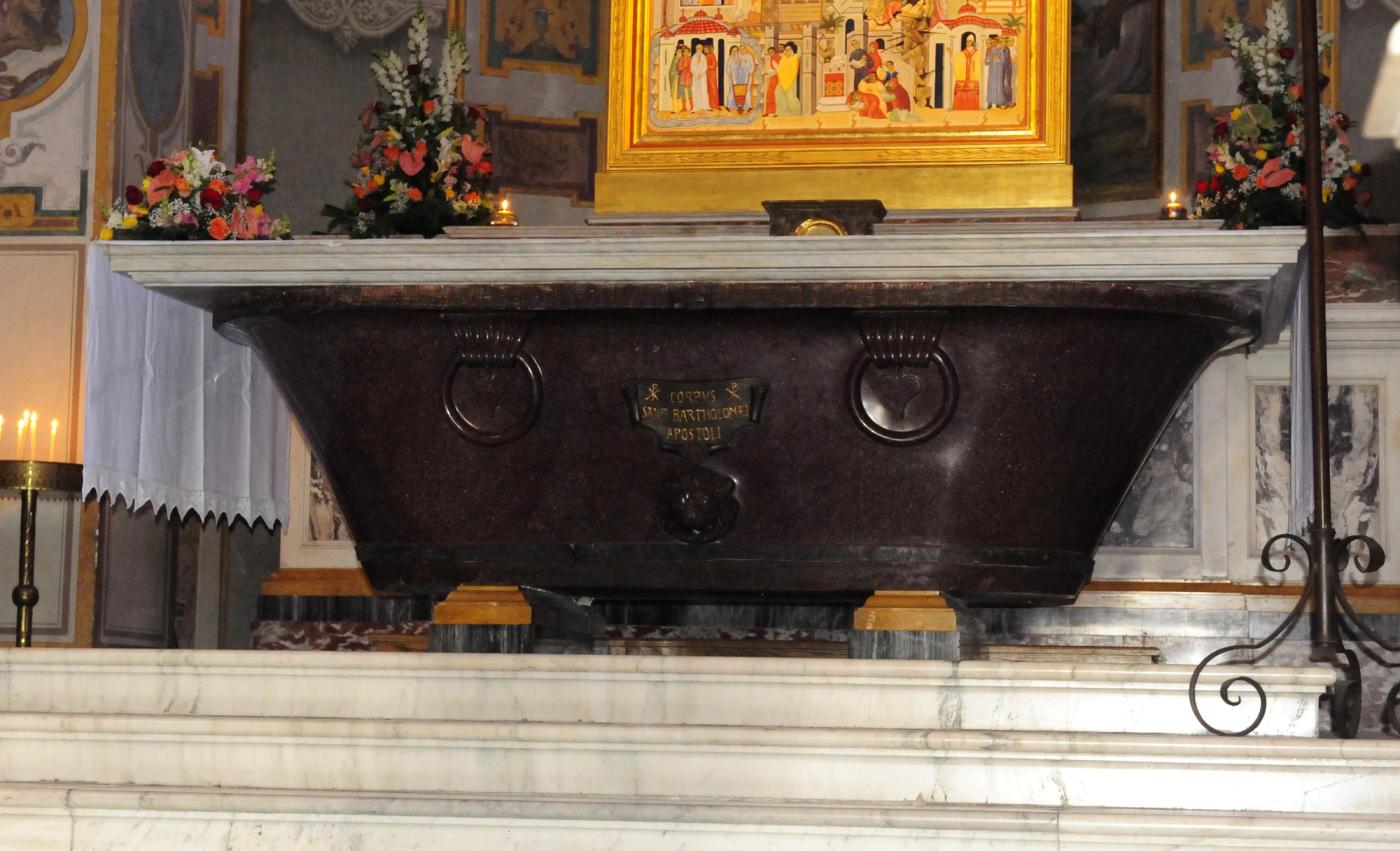
The relics of the three saints were placed in a purloined ancient porphyry tub, which we now see on the altar, positioned above the eleventh century “well” that bears the crude reliefs of Jesus, Paulinus, Adalbert and Bartholomew.
Thank you for reading. If you found this useful, you might also enjoy the books.