Sant'Agnese in Agone--the Piazza Navona
July 19, 2026 · 2 min read
The story of Agnes is well known to us: having rejected the prefect’s son, the prefect had her brought to the brothels at the Circo Agonalis (Domitian), where the soldiers stripped her. An angel came to her rescue and caused her hair to cover her body. Agnes was tied to a stake of burning faggots in the middle of Domitian’s racetrack, but the flames jumped to the clothes of her executioners. At this, one of the soldiers ascended the pile and plunged his sword into her neck. She was buried outside the walls on the Via Nomentana, at the catacombs at her family's estate. A chapel was made for her at the Agonalis, which grew into a small church after Constantine’s Christianization of Rome. The head of Agnes was brought here from Sant’Agnese fuori le mura.
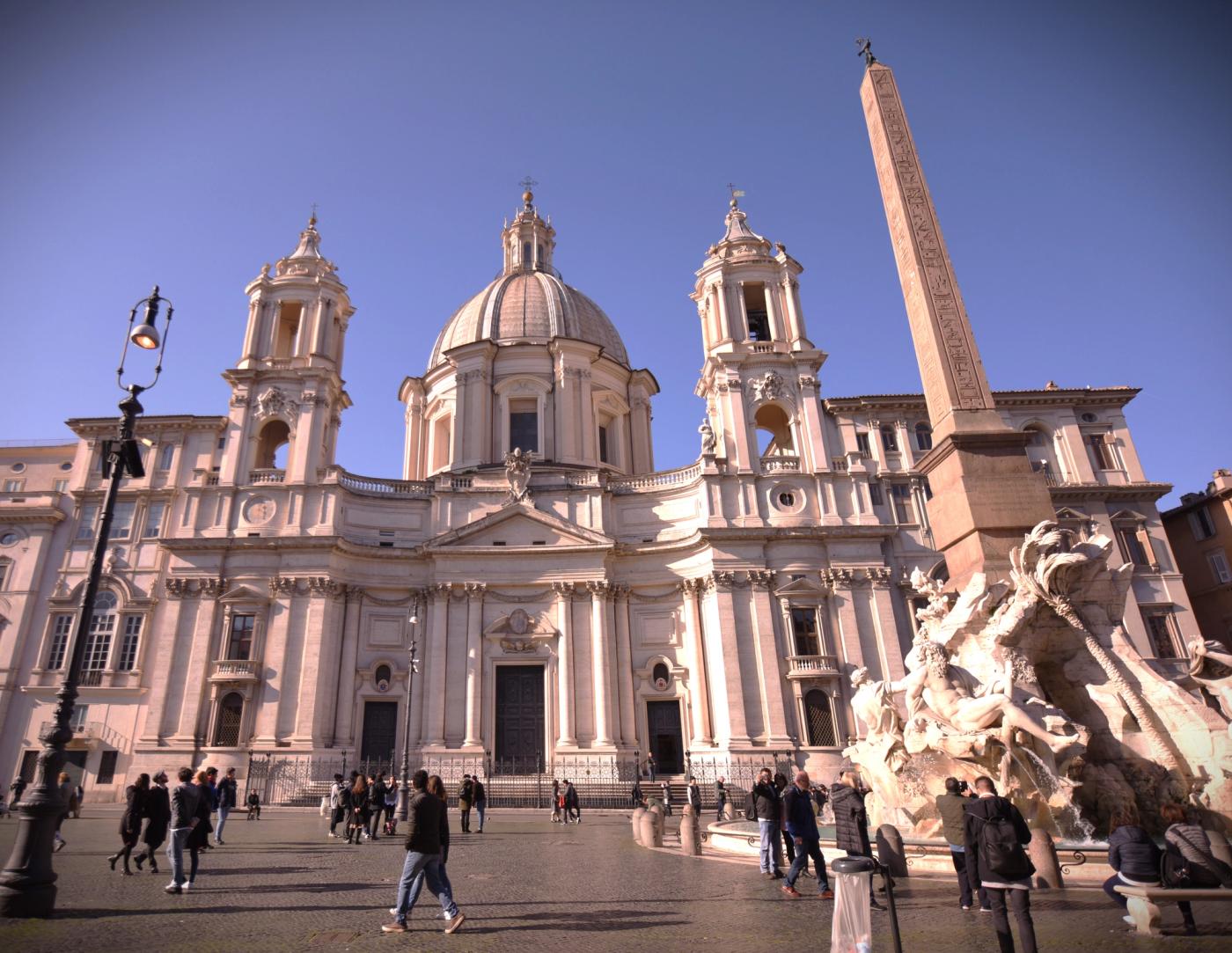
Francesco Borromini (1599-1667) was brought in by Innocent X Pamphili (1644-1655) to complete the family’s church for Agnese in the Piazza Navona, which would be situated facing Bernini’s fountain of the Four Rivers. This would be Rome’s first church with a dome and two flanking campanilii. Viewed from the eastern side of the Navona, it would in the evening twilight be the most beautiful church in all of Rome.
Borromini began with a concave facade with eight tall columns framing the doorways, and added a grandiose pediment, with the two campanilii, which were convex at the lower level and concave on the upper. He planned grand lanterns with heraldic pinnacles. In the nave he created piers with convex curves, and to these he added columns. He increased the height of the dome so that it would stand further above the facade. He intended the interior to be all white, save for the colored columns.
When Innocent died, Borromini's project faltered, and he was ultimately removed, giving way to a return of the Rainaldi's and to his nemesis Bernini! Borromini's pediment was abbreviated by Bernini into what we see today, half the columns were removed from the lantern, and the crowning elements including the heraldic pinnacles were deleted.
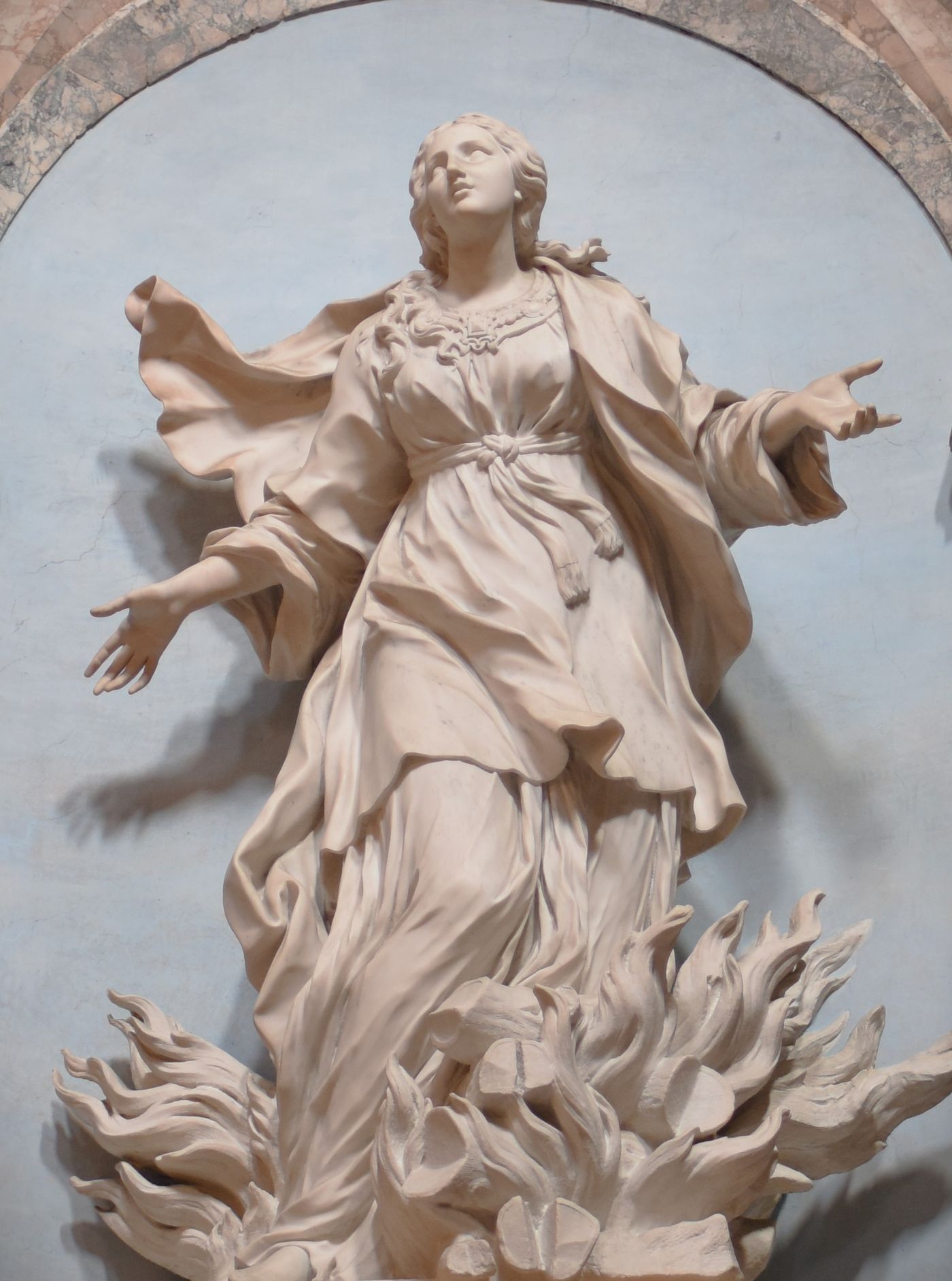
The beautiful statue of Agnese is by Bernini’s associate Ercole Ferrata (1610-1686) (see the flames which cannot touch the saint but which are shooting out to engulf her executioners).
Thank you for reading. If you found this useful, you might also enjoy the books.