Isaia da Pisa's Tomb for Saint Monica at San Agostino in Rome
August 28, 2026 · 2 min read
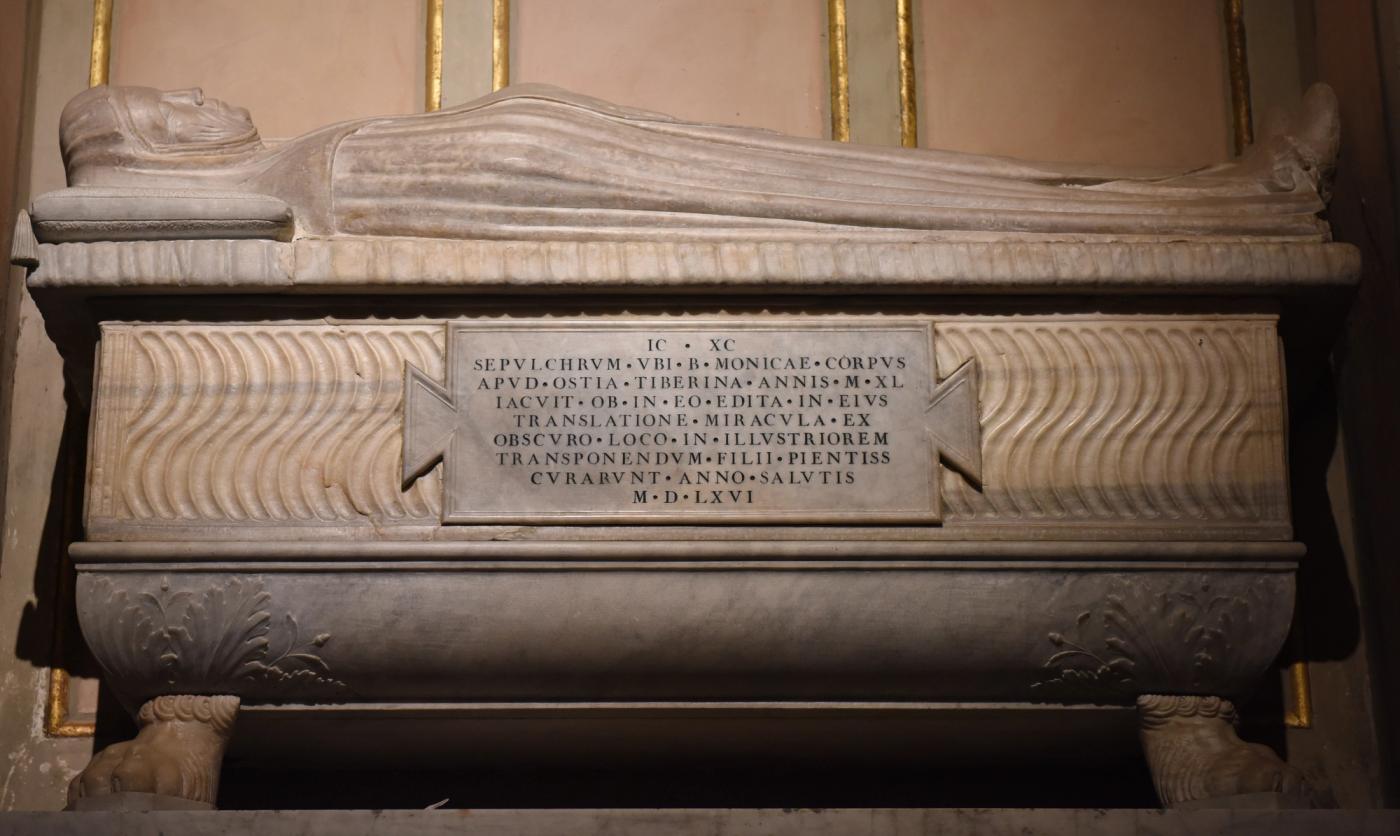
Saint Augustine, converted by Saint Ambrose in Milan, and having spent five years in Italy, determined in 387 to return to his native Hippoin Africa. There he was to become bishop and write his Confessions and City of God and be witness to the fall of Africa to the Vandals. His mother Monica and his son Adeodatus had accompanied him to Rome and Milan, and the three now traveled to Ostia, the seaport of Rome.There Monica took seriously ill and died.
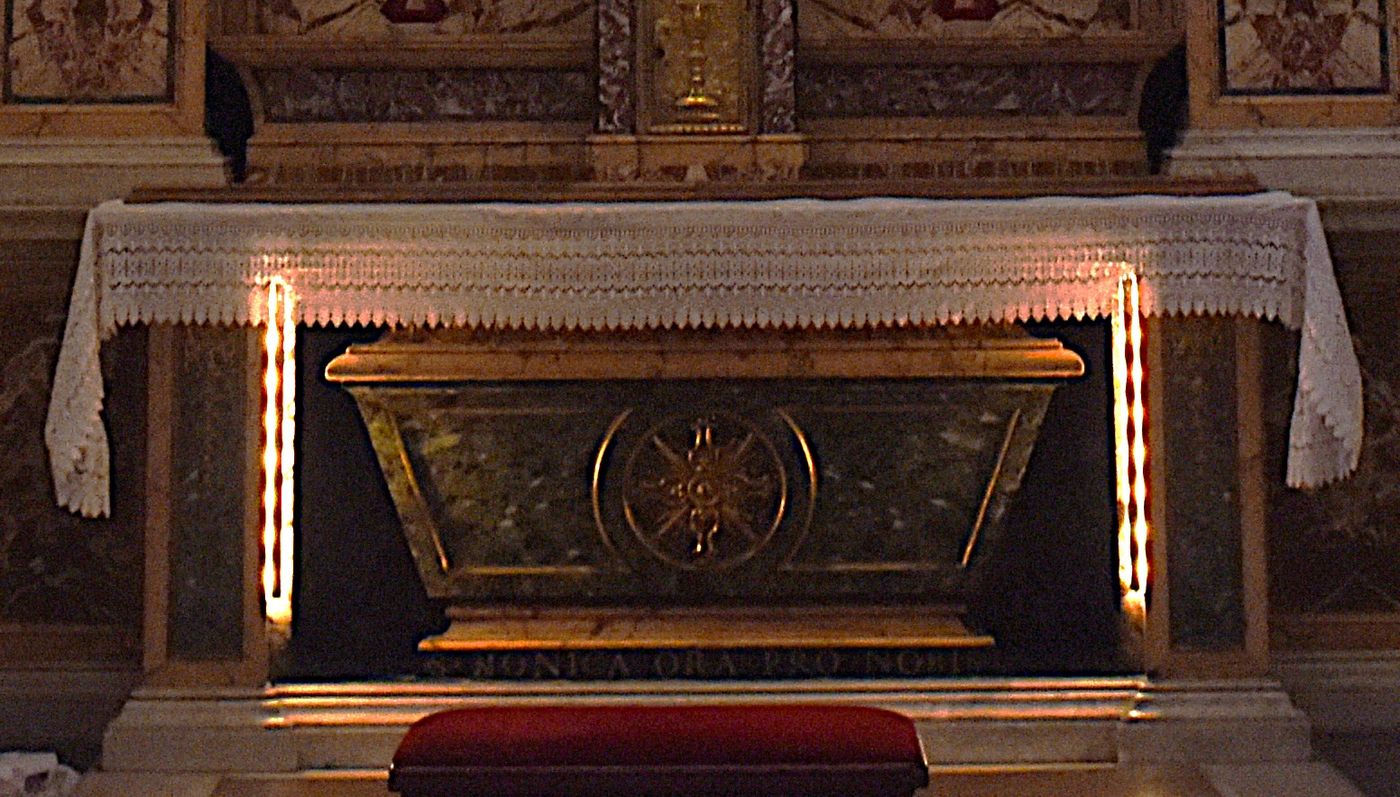
Augustine buried her there. Over time the location of her tomb in Ostia was lost. Augustinian friars rediscovered its location in 1430 with the assistance of the local Ostians and the permission of Pope Martin V, and her remains were brought to Rome, to San Trifone. In 1455 Pope Calixtus III (the first Borgia pope) transferred the relics to San Agostino, recently made under Cardinal D’Estoutville, a devotee of Augustine. Isaia di Pippoganti da Pisa, great Renaissance tomb maker of Rome (he made the tomb for Fra Angelico), made a fabulous tomb for her, a marble sarcophagus with gilded bas-reliefs depicting the translation from Ostia. Although the face of Monica has been described as “austere and dry”, the likeness has an unmistakable dignity.Regrettably the tomb was broken up in an eighteenth-century restoration of the Basilica.Monica’s walnut coffin was opened to reveal the bones of the saint and a lead medallion bearing the name of Monica. Monica was relaid to rest in a new lead casket lined with brass, and placed in a peperino marble urn inlaid with green patina, with a marble lid with the inscription HIC IACET CORPUS S MATRIS MONICAE.
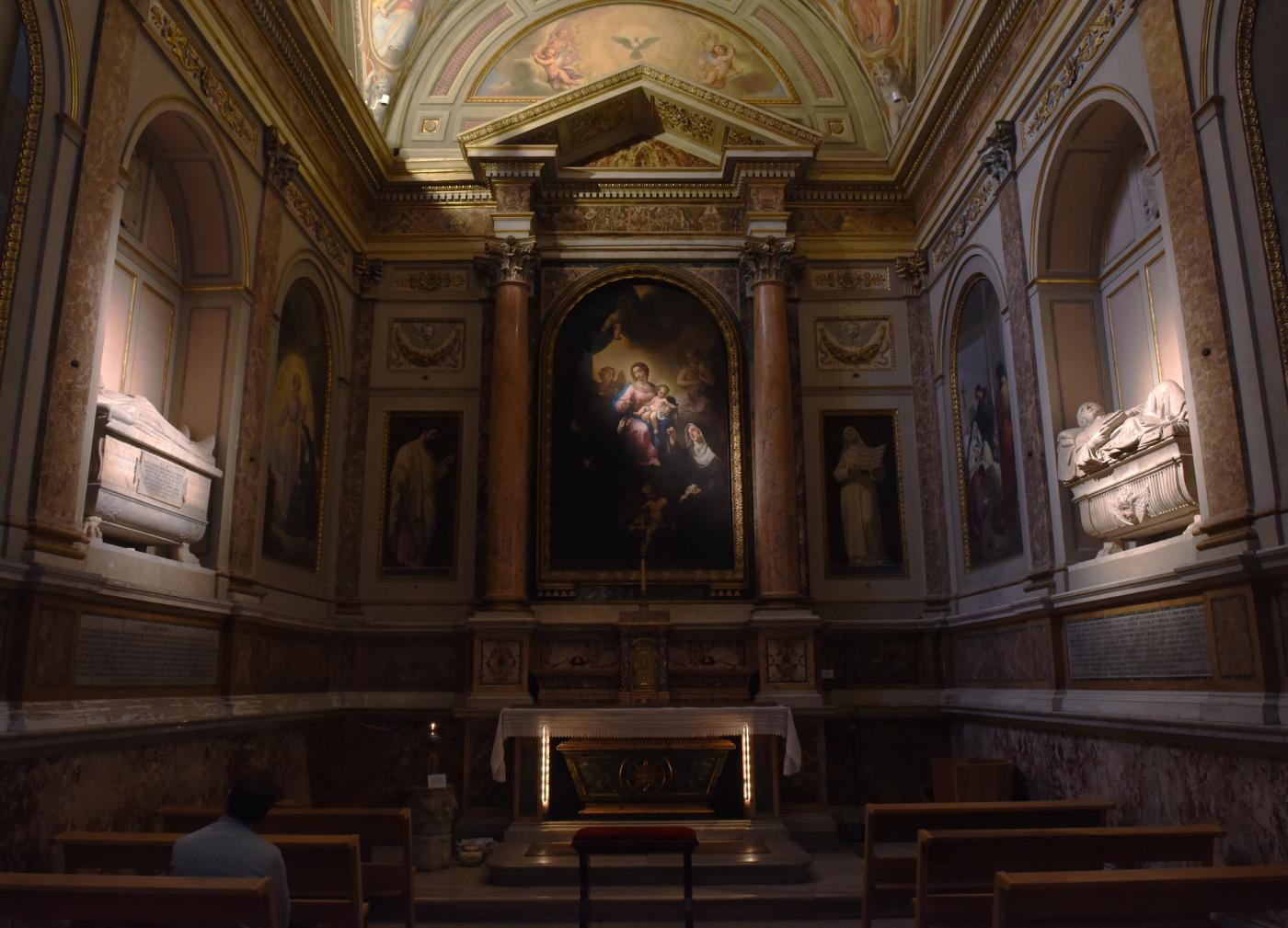
Monica’s chapel was completely remade.Above the altar is a modern painting of Mary giving the Augustinian belt (the cintura) to Augustine and Monica. Fortunately, da Pisa’s effigy of the saint was not destroyed and it is on the left wall. Four statuettes of saints from the tomb can be seen in the portico off the Via Pianellari.
Thank you for reading. If you found this useful, you might also enjoy the books.